The Strauss Center at The University of Texas at Austin partnered with the Atlantic Council’s Cyber Statecraft Initiative to host another regional round of the Atlantic Council’s renowned cybersecurity policy competition, the Cyber 9/12 Strategy Challenge.
This stand-alone event took place The University of Texas School of Law on Saturday, January 31 – Sunday February 1, 2026, with teams vying for a title that included, not just bragging rights, but also a cash prize for the top three teams. Included in the two-day event were opportunities for professional development with cybersecurity experts in the public and private sector. The weekend featured a keynote speech that dissected the intersection of cybersecurity, intelligence, and the legal and governmental processes that impact and are impacted by both cybersecurity and intelligence. All photography was provided by Bob Daemmrich (bdaemmrich@gmail.com).

The Strauss Center’s Texas Cybersecurity Clinic Lead, Francesca Lockhart, welcomed teams, coaches, and judges to The University of Texas at Austin. This year saw 24 student teams come to the School of Law from Texas and nationwide, with 37 judges from the public and private sector sharing their cybersecurity and national security expertise.

Safa Shahwan Edwards, the Director of Capacity Building & Communities in the Atlantic Council’s Cyber Statecraft Initiative, provided welcoming remarks and started the 2026 Austin Regional competition with a brief discussion about the needs of developing a strong cybersecurity workforce. After welcoming remarks, a public sector cybersecurity expert gave an overview of the state of cybersecurity and critical infrastructure in the United States today.
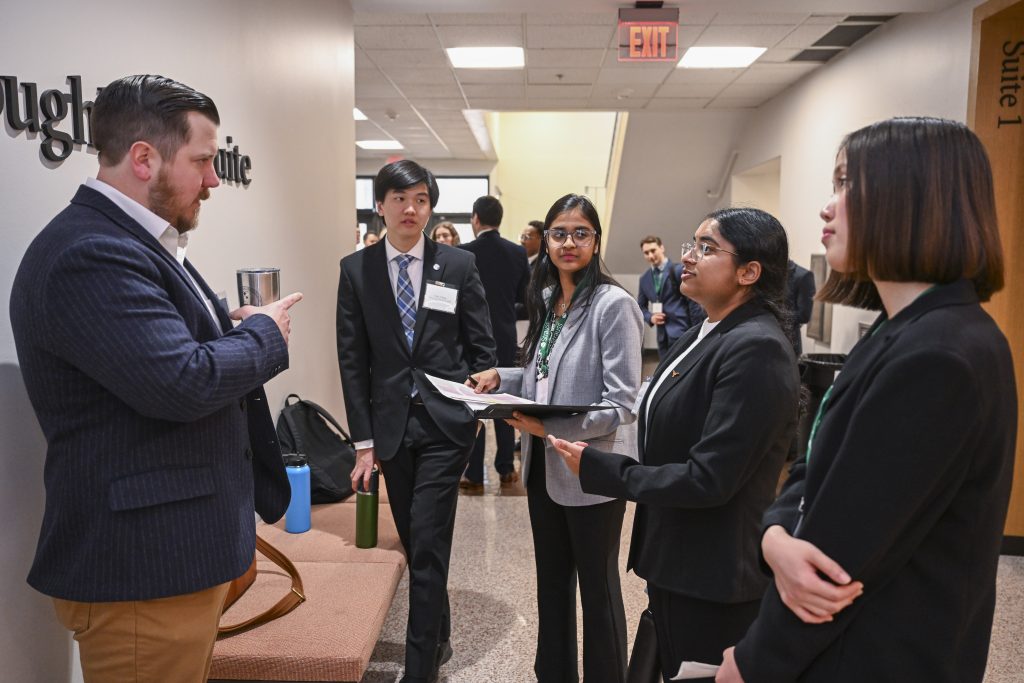

The first day of competition then launched into qualifying rounds, where students grappled with a fictional cyber attack with nationwide–and international–security implications. As part of the Cyber 9/12 Strategy Challenge, student teams are given the fictional scenario in advance, and must prepare a written brief with short- and long-term solutions to the problem. They then provide an oral presentation in front of judges, who act as the National Security Council.

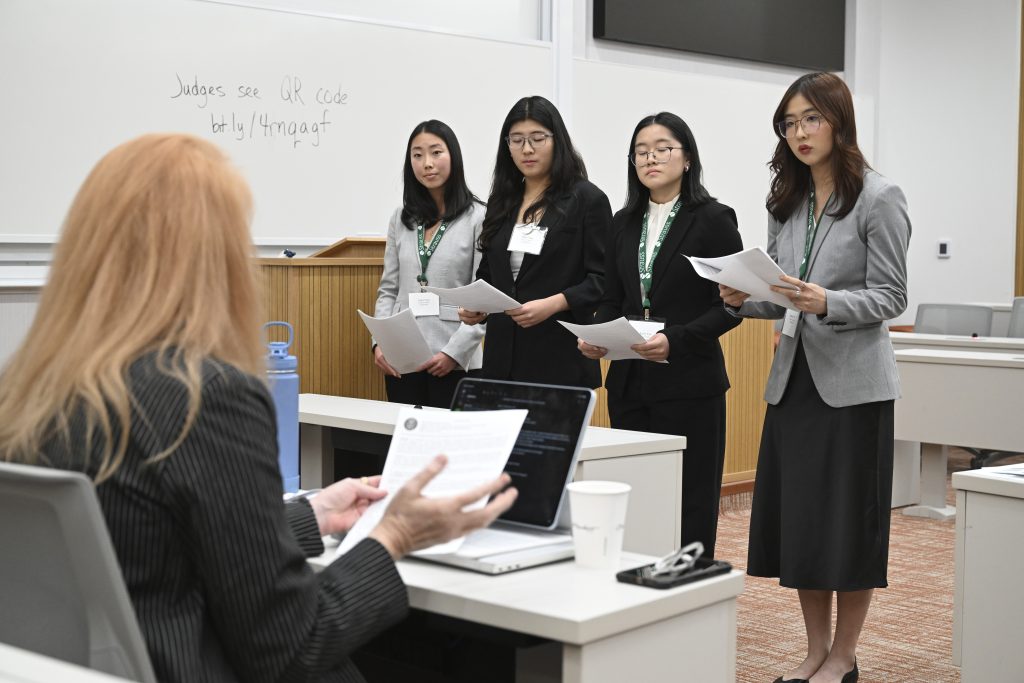
Teams presented, then answered questions from the judges, and received feedback on their oral and written briefs. Judges graded the teams based off of the feasibility of their solutions, as well as their creativity, teamwork, understanding of the national and international law and policy at play, and more.


The qualifying rounds ended with closely matched teams in a tight competition, reflecting the grasp each team had on cybersecurity elements at play.


At the end of the qualifying rounds, teams gathered for awards. Team 504 Bhad Gateway of Duke University won Best Teamwork (left) and Team BASH of Sam Houston State University won Best Decision Document (right). Sam Houston State University joined the Austin Regional for the first time this year.
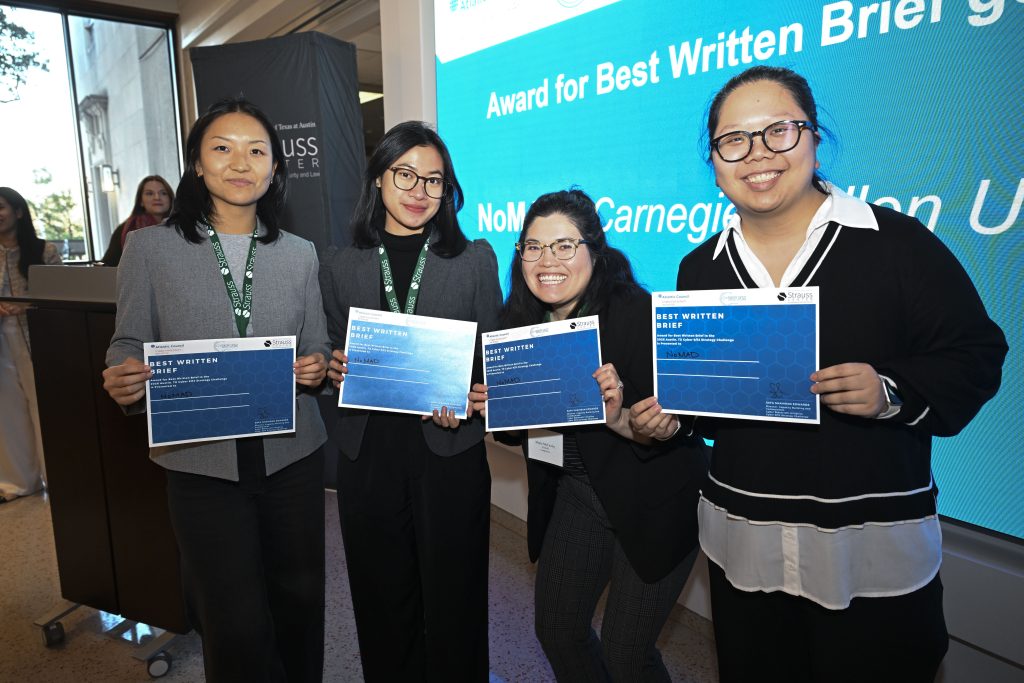
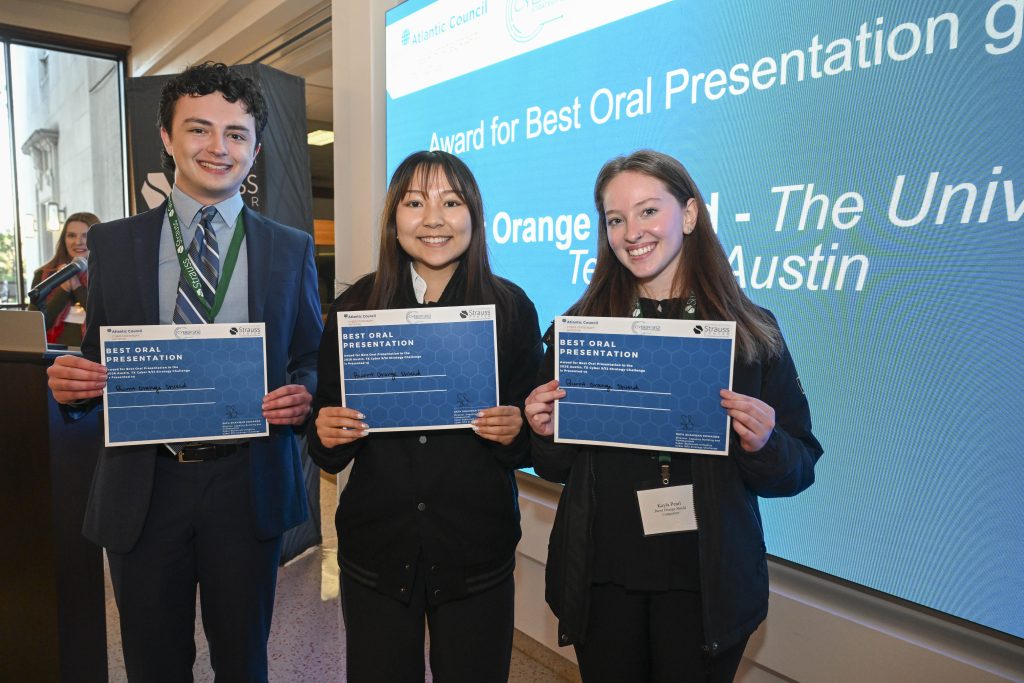
Team NoMAD of Carnegie Mellon University won Best Written Brief (left) and Team Burnt Orange Shield of The University of Texas at Austin won Best Oral Presentation (right).

Finally, Team DSU Trojan Horses of Dakota State University, also joining the Austin Regional for the first time, won Most Creative Policy Response. Congratulations to all teams for joining us on Day 1 of the competition!
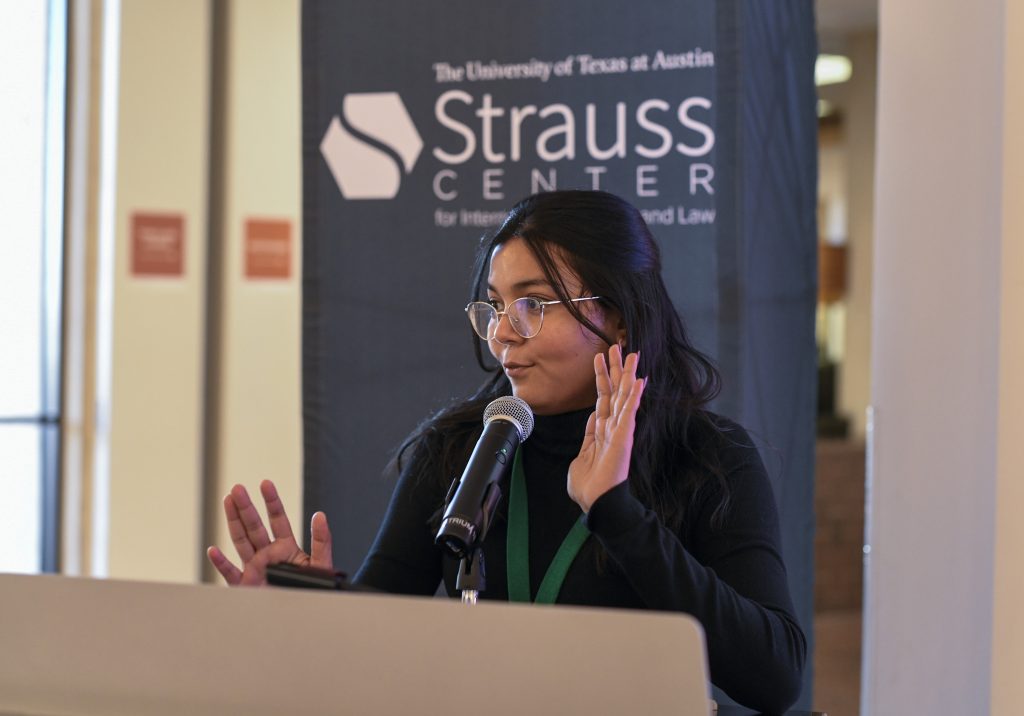

The second day of competition began with introductions, in part featuring Urmita Chowdhury, Assistant Director of Trainings and Competitions with the Atlantic Council’s Cyber Statecraft Initiative (left). This day featured the Semi-Final rounds, as well as a new secondary round that gave teams the chance to either redo their written brief, or to try their hand at the fictional scenario that had evolved with increasing stakes for the Semi-Finals. This secondary round was the Presentation Skills and Policy Proposals round, designed for student teams who did not qualify for Semi-Finals due to the very close competition from round to round.


The fictional scenario evolved from Qualifying Rounds to Semi-Finals, challenging student teams with new geo-political threats and very short time within which they had to turn around another written brief. 12 teams competed against one another to make it to the Final rounds during the afternoon of the second day. Throughout the competition, teams had a chance to network with judges, connecting students who are upcoming in the cybersecurity field with experts from the public and private sectors.
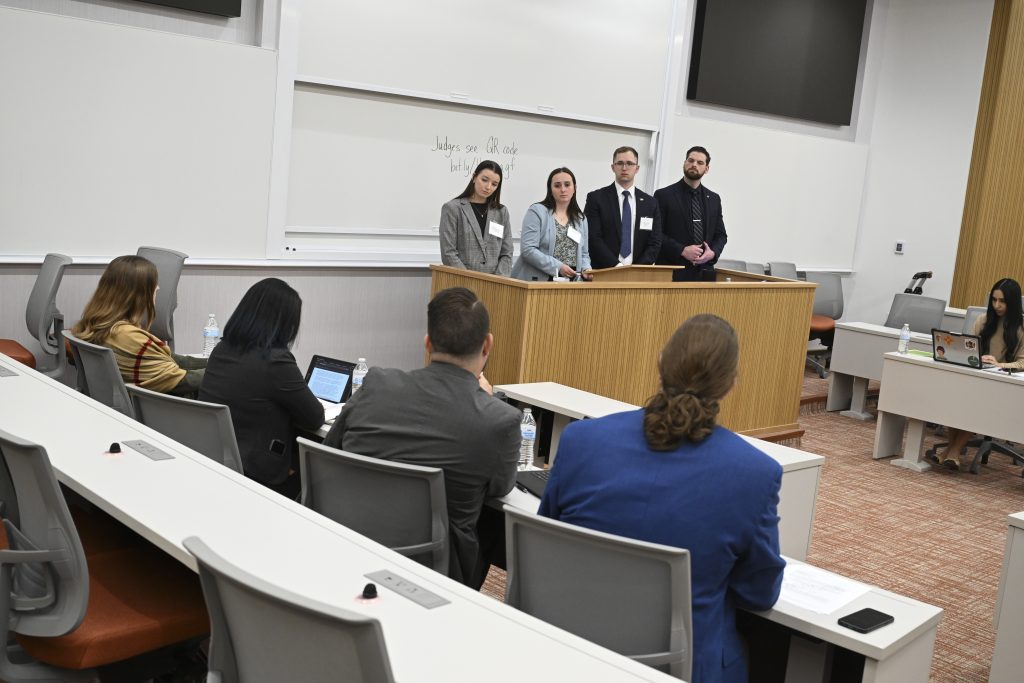


The Final rounds challenged student teams even more with a last-minute update to the fictional scenario and only a short time to develop and present any final solutions. From left to right, the Finalists were Texas A&M’s Directorate 41, Stanford University’s Cyber Super Girls, and The University of Illinois at Urbana-Champaign’s Import Illini.

Stanford’s Cyber Super Girls won the 2026 Austin Regional Cyber 9/12 Strategy Challenge. Congratulations, Cyber Super Girls!
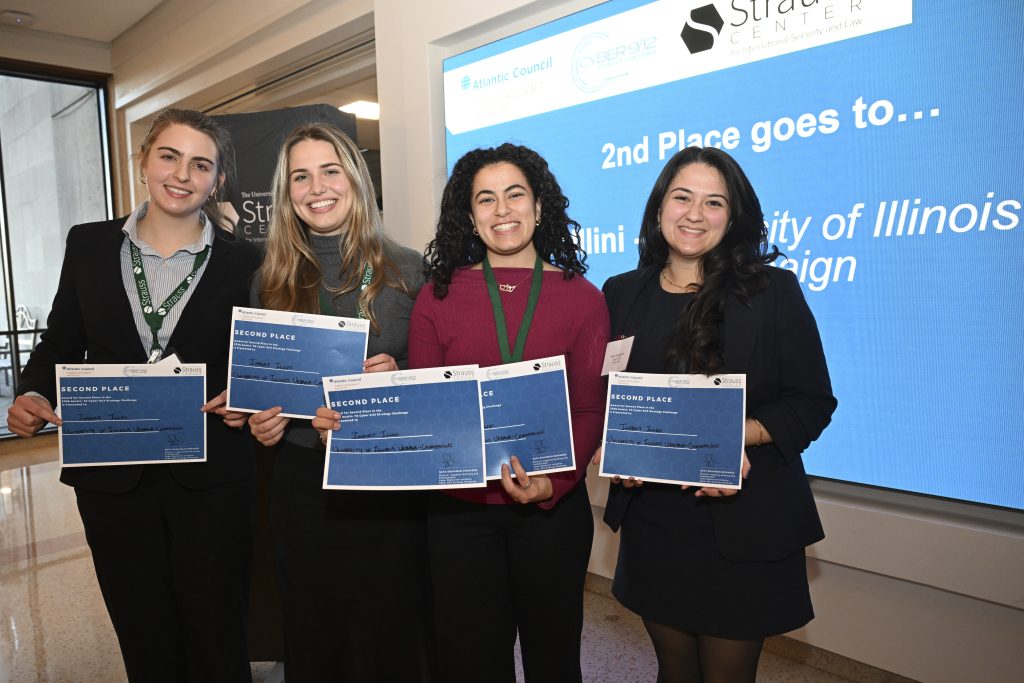
The University of Illinois at Urbana-Champaign’s Import Illini won second place. Congratulations, Import Illini!

Texas A&M’s Directorate 41 won third place. Congratulations, Directorate 41!
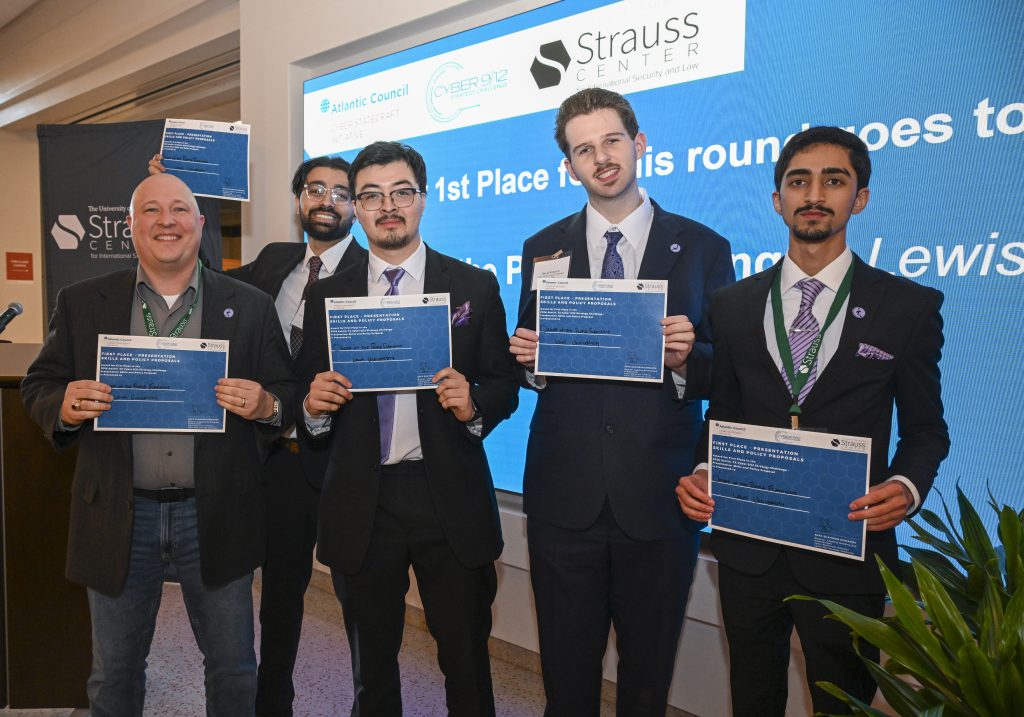
Finally, Lewis University’s Order of the Purple Flamingo won First Place in the “Presentation Skills and Policy Proposals” round that ran concurrently with Semi-Finals.
How does the competition work?
This is a simulation-based, judge-graded competition in which teams consisting of three to four students (who can be either graduate students or undergraduate students, from any disciplinary background) collaborate to provide policy analysis and recommendations in response to an evolving, fictional fact-pattern relating to cyber crisis and conflict. The competition is designed to reward substantive knowledge across a range of areas, including any number of policy domains as well as insights from technology, business, and law. The competition also rewards both written and spoken communication skills. The event is on the record and proceedings may be photographed and recorded for public use.
More specifically:
Each team will draft written policy briefs in response to this initial scenario, and those written responses must be submitted at a later determined date. The first-round grade will be determined by the oral presentations that will then occur on the competition’s first day. The oral presentation for each team begins with a ten-minute presentation to judges, followed by ten minutes of answering questions from the judges. The judges’ score of the qualifying round oral presentations will be combined with the team score from the more detailed written policy brief submitted in advance of the competition, and approximately 50% of teams will advance to the semi-final round on day two based on those combined results.
We will announce the semi-finalists at the end of day one, and at that point, we also will distribute an updated intelligence report that expands upon the original scenario. The semi-finalist teams will then have the evening to refine and amend their analysis as they deem appropriate, with a new round of oral presentations taking place beginning on day two. Three finalist teams will be selected based on the results of that round, and at that point they will receive a third and final intelligence report, detailing further changes to the scenario. The finalist teams will have only a very short amount of time to use the new information to revise their policy responses. The finalists then will deliver a ten-minute oral presentation, followed by ten minutes to answer direct questions from a panel of judges.
Preparation materials, including a starter pack for your team and past competition scenarios featuring award-winning policy recommendations can be found on Atlantic Council’s website here.
Who can participate?
You apply as a team. Each team must have at least three, but no more than four, student members. Anyone who is a current student at the graduate or undergraduate level, without respect to the nature of your degree program, qualifies. Each team also must identify a faculty member or other professional who will serve as their coach. The coach is welcome to but not required to attend the event. We welcome students from non-US universities to apply, however, students must be able to be present in-person at the local competition time. If your team cannot confirm a member of faculty to coach your team, please let us know and we can assist with identifying a cyber practitioner familiar with Cyber 9/12 to support your team.
What is the prize?
There are cash prizes for the student members of all three teams that reach the final round of the competition. The overall winning team will receive a total $2000 honorarium. The second-place team will receive $1000. The third-place team will receive $500.
What is the application process?
Applications are closed. Applications for the 2027 Austin Regional, which will take place in late-January, early-February of 2027, will open in Fall 2026.
Do we have to pay to participate?
No, the event itself is free. The Strauss Center and the Atlantic Council will bear all costs for hosting and orchestrating it, including providing breakfast, lunch, and snacks. Teams cover travel themselves.
I have other questions. Who can I contact?
For further questions about the Austin Regional, please contact Susan Crane from the Strauss Center.