
Atomic Attitudes: Experimental Evidence on Norms, Taboos, and the Non-Use of Nuclear Weapons
The Robert S. Strauss Center for International Security and Law welcomed Benjamin Valentino, Associate Professor of Government at Dartmouth, on November 8, 2011. Jeremi Suri, Mack Brown Chair, introduced Dr. Valentino.
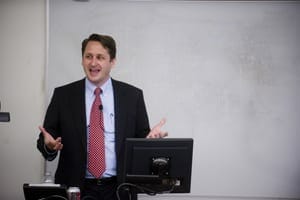
Dr. Valentino began by introducing his research, which examines the non-use of nuclear weapons since 1945 and assesses the power of international norms and institutions in shaping state behavior. He detailed three main schools of thought on whether people have a strong aversion to the use of nuclear weapons. These theories encompass the ideas that an ethical norm has emerged against the legitimacy of nuclear weapons, that leaders avoid using nuclear weapons for fear of setting a dangerous precedent, and that conventional weapons are often more militarily advantageous.

Dr. Valentino described the survey experiment he used to test public attitudes towards nuclear weapons. In the experiment, subjects read news stories about military crises in which the U.S. was considering a nuclear strike or in which the U.S. had already launched a military strike. The subjects were told how effective nuclear weapons were in comparison with conventional forces. When both were equally effective, more people preferred the use of conventional weapons. However, people expressed fewer ethical concerns about the use of nuclear weapons as their effectiveness and military utility increased.
Dr. Valentino found a weak norm against the use of nuclear weapons, but he found no conclusive evidence of a nuclear taboo. The strongest reason that people preferred conventional strikes to the use of nuclear weapons was the fear of setting a precedent for others to use nuclear weapons in the future. Dr. Valentino concluded that the tradition of non-use is much more fragile than many believe, and public opinion would likely not hold leaders back from using nuclear weapons in certain situations. According to Dr. Valentino, it may be useful to consider accelerating work on conventional alternatives that have similar capabilities to nuclear weapons.

Questions from the audience covered whether certain people preferred the use of nuclear weapons, whether the context of a scenario impacts public opinion on nuclear use, and why the U.S. might be more willing to use nuclear weapons in the future.
Watch the full presentation below: