
Creative Climate Communications: Food Security, Climate Science, Policy, & Society
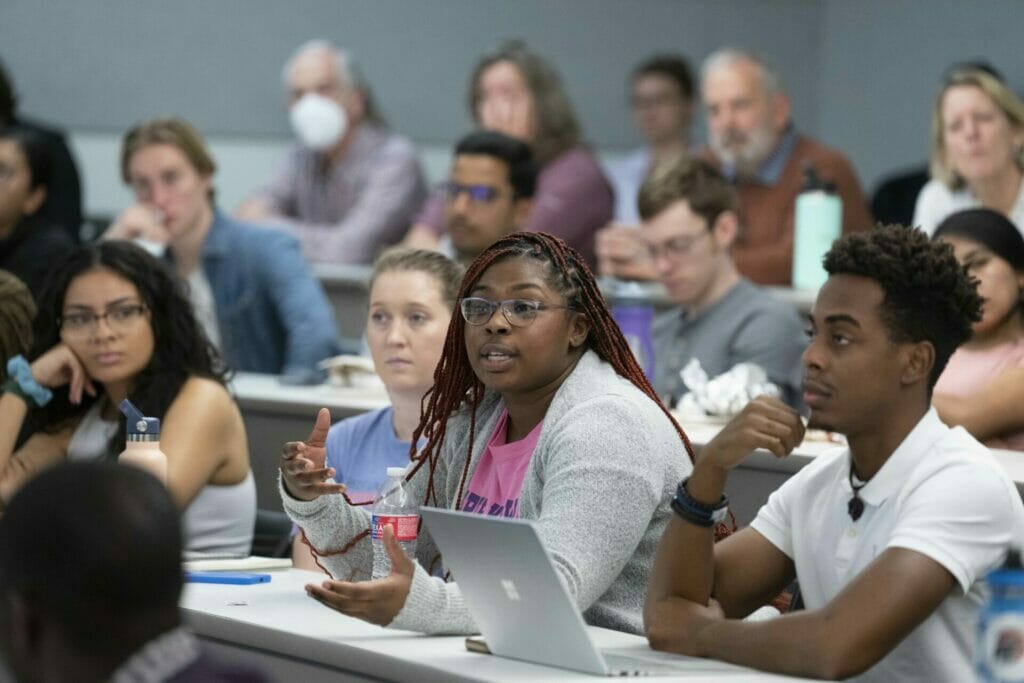
On Tuesday, January 10, the Strauss Center hosted Dr. Max Boykoff, Chair of the Environmental Studies department at the University of Colorado Boulder, for a talk on “Creative Climate Communications: Food Security, Climate Science, Policy & Society.” This talk was held at the LBJ School of Public Affairs as part of the Strauss Center’s Brumley Speaker Series.
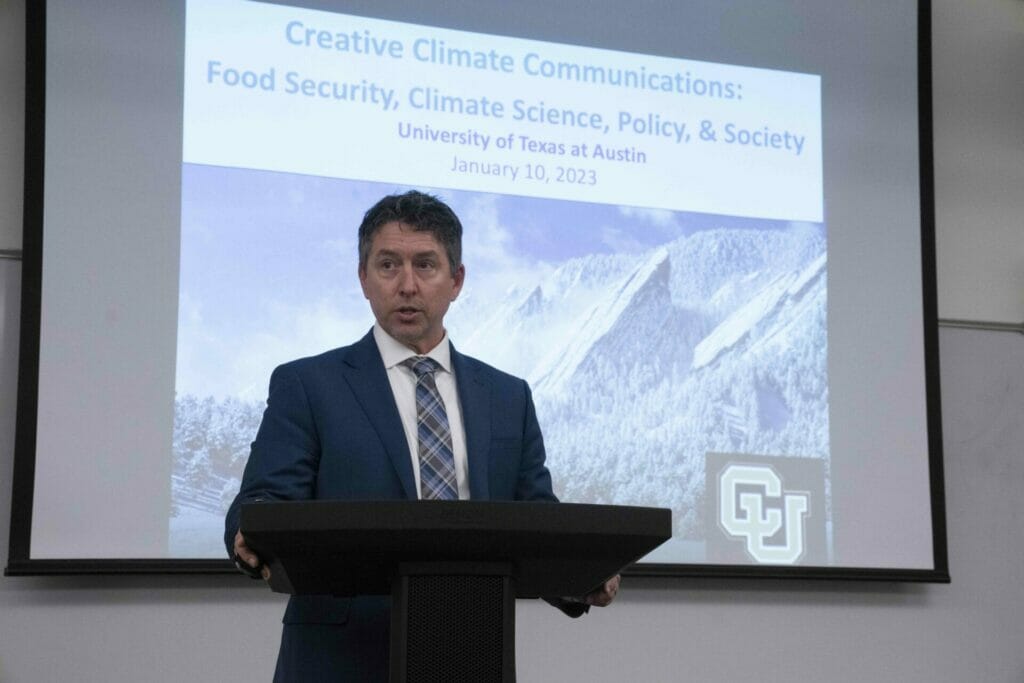
Dr. Boykoff started his presentation right on the mark – captivating the audience by emphasizing that the climate change crisis is a “threat multiplier” that touches all areas of society, an urgent national security concern, and thus requires collective action from academics, policymakers, students, and all in society. Standing in the way, he described, are forces that promote fear-mongering, alienate the masses, and paralyze individuals to take action.
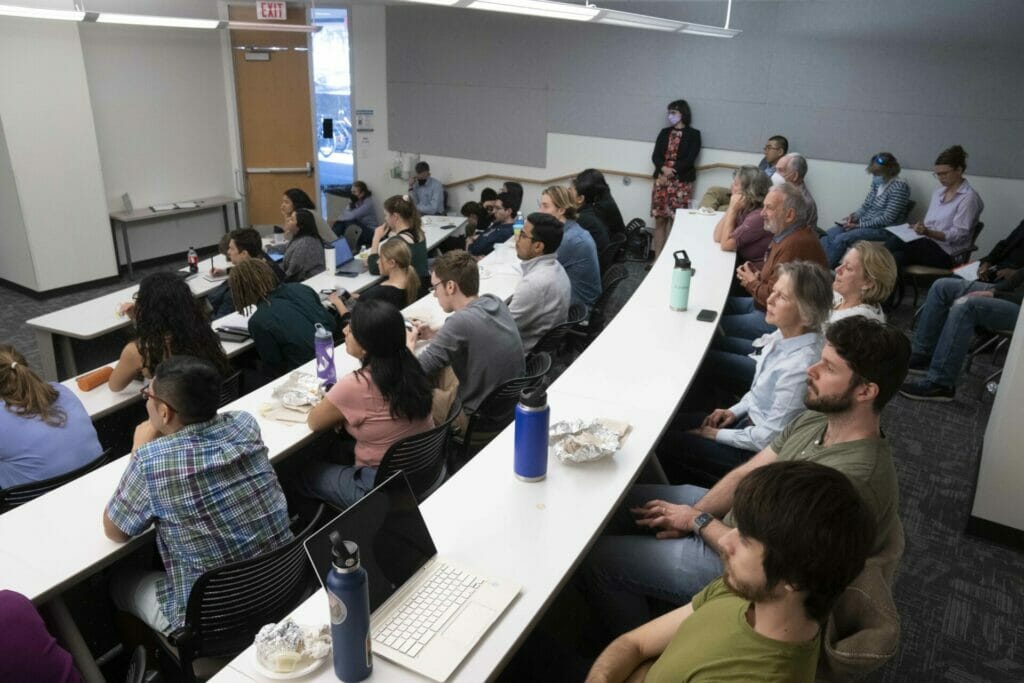
Dr. Boykoff structured his exciting presentation by focusing on three main areas, each building on another, exploring how we can approach and push back against these pervasive forces. Along the way, he used many interesting anecdotes and experiences he learned from his extensive research on climate science communications and his work in a multitude of climate-related organizations (perhaps the UN’s IPCC stands out).
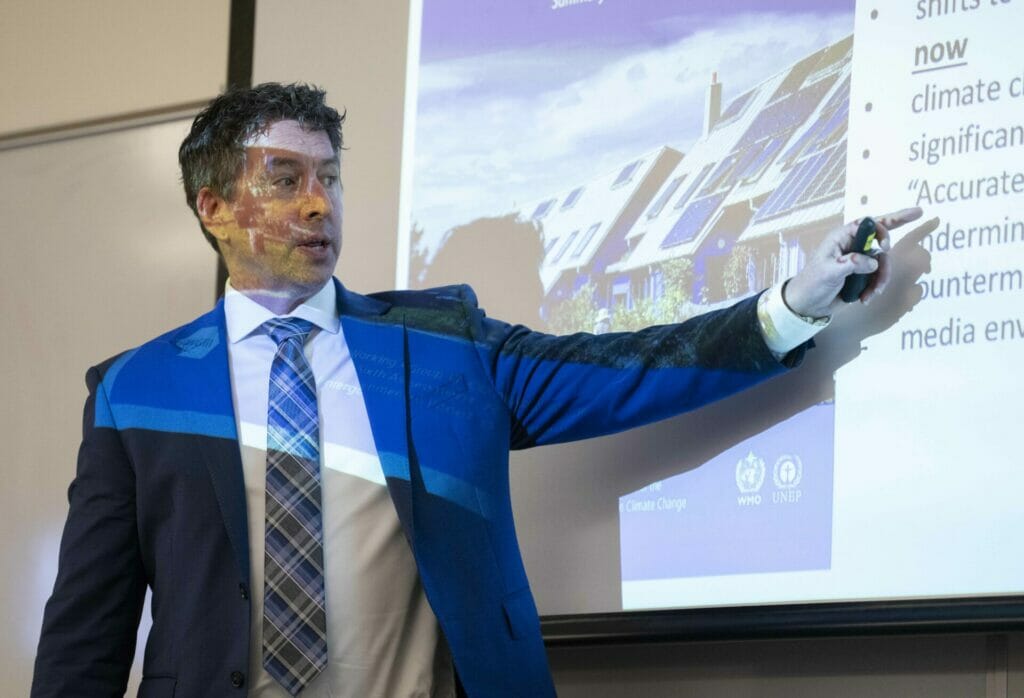
In the first part of the presentation, Dr. Boykoff described how the past and current state of climate reporting has evolved. Through a pivotal research article he wrote with his brother, he provided stark evidence that news reporting across the globe was significantly disconnected from scientific evidence when reporting on (human-caused) climate change. Though the initial study was done in the early 2000s, a recent reboot showed only minor improvements. And as an individual of the audience noted, the findings could even be more worrying as it lacked news reporting data on other countries, such as China.
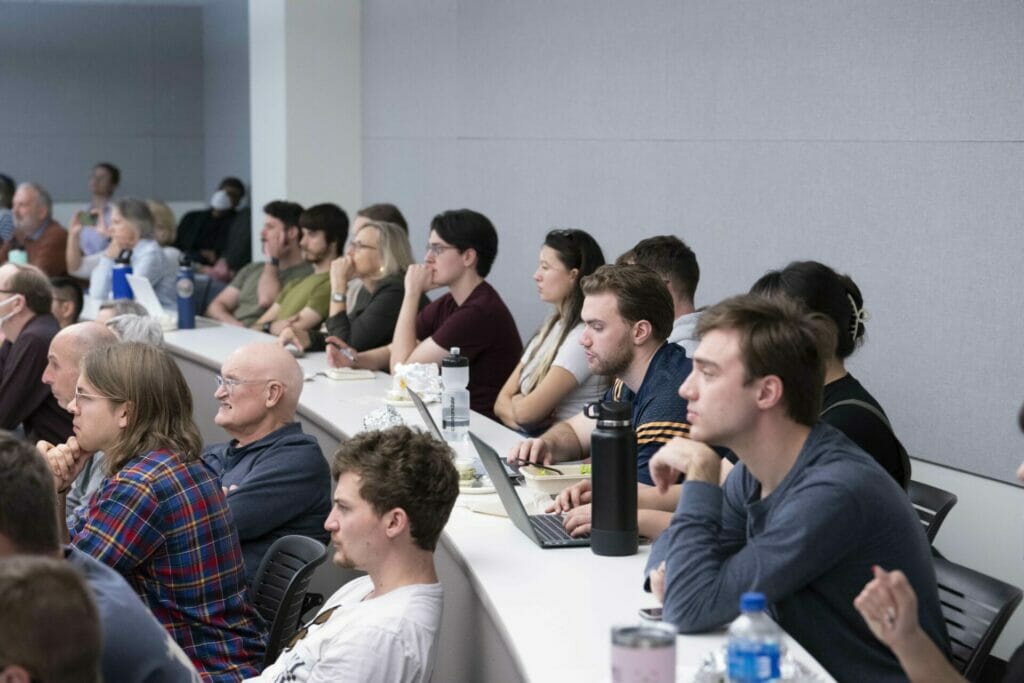
Dr. Boykoff, in the second part of the presentation, described The Heartland Institute as a prime example of an organization engaged in “organized climate change denial.” As an attendee of the institute’s annual 2011 and 2021 conventions, he conducted a participant ethnographic study of the institute and its members. He shared some high-level findings and contrasts these between the two meetings (that occurred ten years apart) to demonstrate some worrying themes of climate misinformation that continue to exist. Perhaps the key aspect the audience could take away from this section is that organizations such as the Heartland Institute are evolving their tactics to engage in “small-ball” initiatives, in which climate misinformation campaigns are run directly through state and local initiatives. In response to a question on how we can best prepare ourselves against such initiatives, Dr. Boykoff succinctly stated that we must “Know thyself, Know thy audience, and Know thy stuff.” He provided an example of how to accomplish this through referencing his work with a local science engagement networ. Additionally, he described his work alongside farming communities in southern Colorado to ensure they are correctly informed on climate-related information.

The presentation came to a close with a practical section on how creative we can, and to some extent, must get in communicating on climate. Dr. Boykoff described the recently launched project, the “Drawdown Act Up” program (part of Comedy for Climate), in which students are taught how to communicate climate solutions through short comic skits. This innovative program continues to grow, and this upcoming summer, a professional comedian will be hosting a show on the Boulder campus focusing on comedic climate change skits. The good news is, we are all invited!
Dr. Boykoff left us with some practical advice in our approach to climate communications: we must always seek advocacy for facts, evidence, and truth.

This event was free and open to the public. Special thanks to Strauss Center Cybersecurity Scholar in Residence Chinmayi Sharma and Brumley Fellow John-Patrick Akinyemi for moderating. For more information on this event, contact Brittany Horton at brittany.horton@austin.utexas.edu.
Biography
Max Boykoff is a Professor in the Environmental Studies department (where he now serves as Chair) at the University of Colorado Boulder. He is also a Fellow in the Cooperative Institute for Research in Environmental Sciences. Max has ongoing interests in science and environmental communications, science-policy interactions, and political economics and the environment. He has experience working on six continents, and is a co-author and editor of seven books and edited volumes, along with many dozens of articles and book chapters. Among his other activities, he is a Contributing Author to the Intergovernmental Panel on Climate Change (IPCC) Sixth Assessment ‘Mitigation and Policy’ Report, he is a part of the Independent Science Panel for the Deep South Challenge in New Zealand, he is Deputy Editor for the social sciences/history team for the Journal of Climatic Change for over a decade, and he has been an advisor on the ‘Don’t Look Up’ film platform. Max also leads the Media and Climate Change Observatory (MeCCO) while he leads the Colorado Local Science Engagement Network and co-Directs Inside the Greenhouse.