
The End of a Special Relationship? The Deterioration of the China-North Korea Alliance
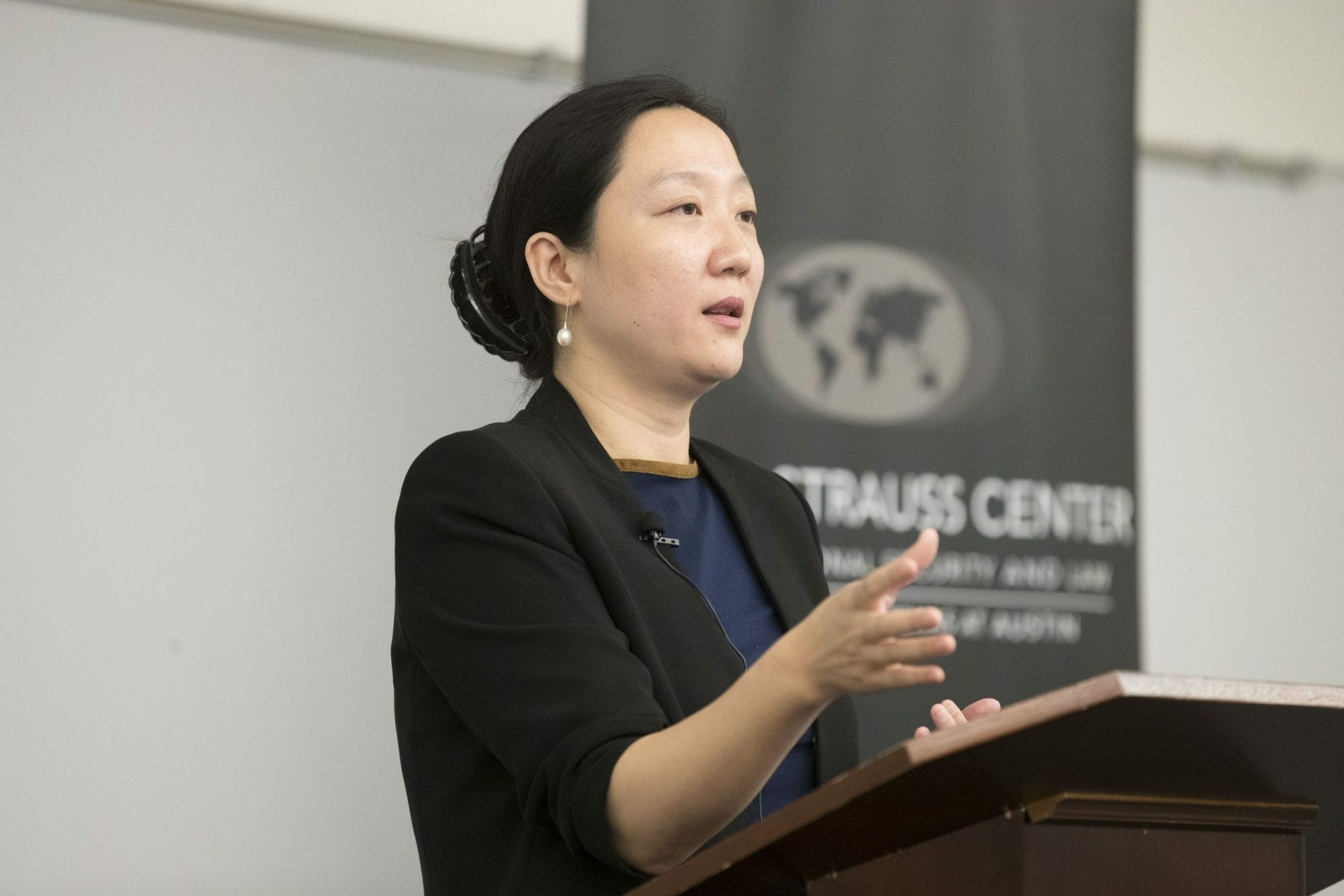
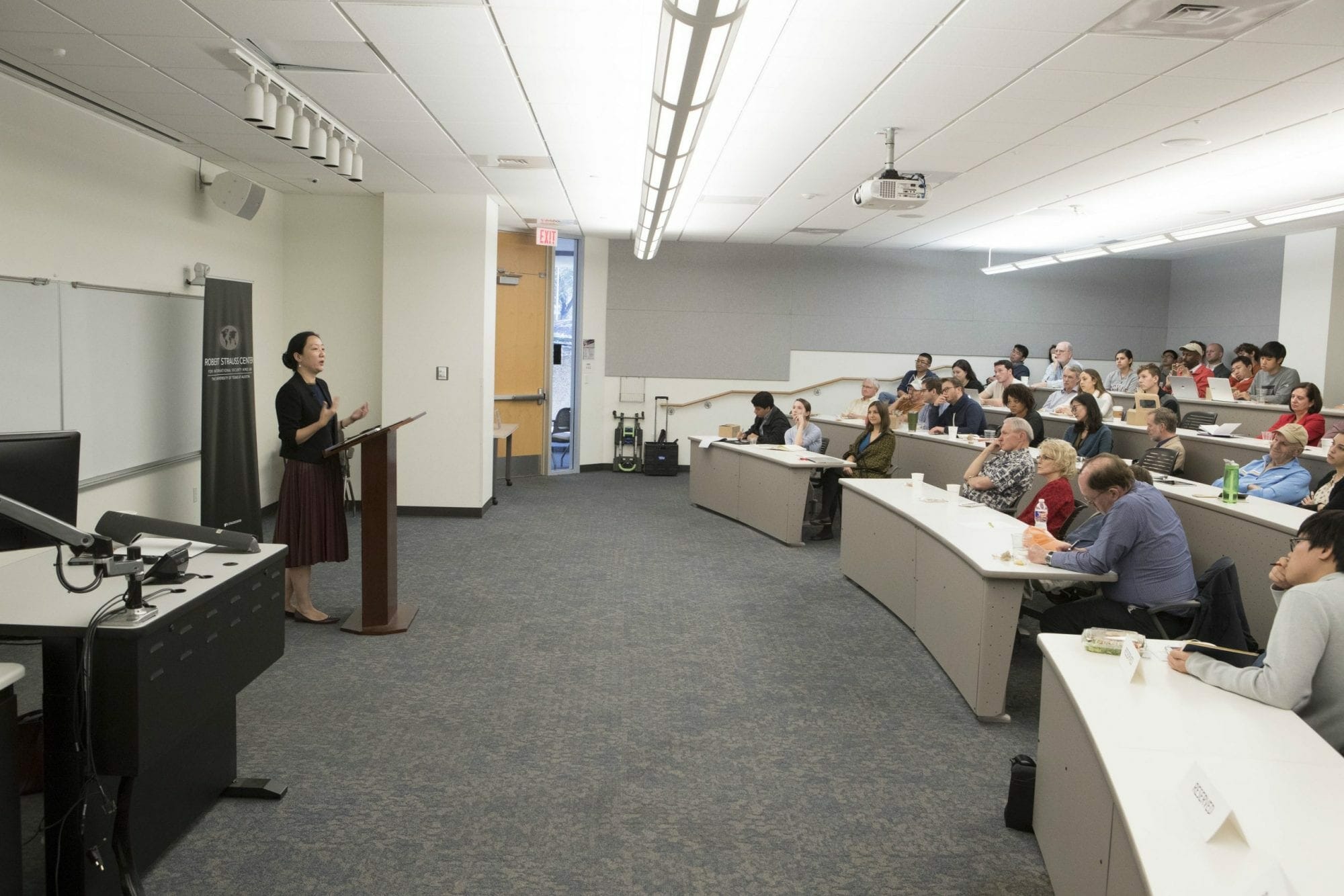
On Wednesday, November 29, 2017 the Robert Strauss Center welcomed Yun Sun, Senior Associate with the East Asia Program at the Stimson Center for a talk on Chinese foreign policy towards North Korea as part of the Center’s Brumley Speaker Series.
Photos of the event can be found here and a video can be accessed here.
Ms. Sun began the talk with a review of the China-North Korea Alliance by mentioning that the Sino-North Korea friendship treaty has its roots in the Korean War. This alliance binds both countries to protect each other from external threats with their maximum capability under any circumstance.
Despite the alliance, North Korea still developed nuclear weapons for its national security. Ms. Sun attributes major changes in China’s policy as the leading cause for the Kim regime’s nuclearization.
North Korea saw these changes as clear violations of the mutual defense treaty. Pyongyang felt a sense of vulnerability, especially after the United States’ elimination of Saddam Hussein of Iraq and Muammar Gaddafi in Libya. North Korea, as a calculated and rational nation-state, is pursuing nuclear weapons for a deterrence against the United States.

Ms. Sun said China also finds North Korea’s nuclear weapons program as a problem. This program can potentially result in radiological contamination, refugee crisis, and another war in the Korean Peninsula.

Despite these problems, China refuses to abandon North Korea because Beijing considers Pyongyang as a diplomatic rather than a strategic liability. China believes that North Korea has a legitimate reason to fear the United States and to develop the nuclear weapons as a deterrence. In addition, Beijing values Pyongyang as a geopolitical counterweight to the United States’ presence in the region. Ms. Sun also emphasized that China also wants to see unification of the Korean Peninsula as it hopes to unite with Taiwan.