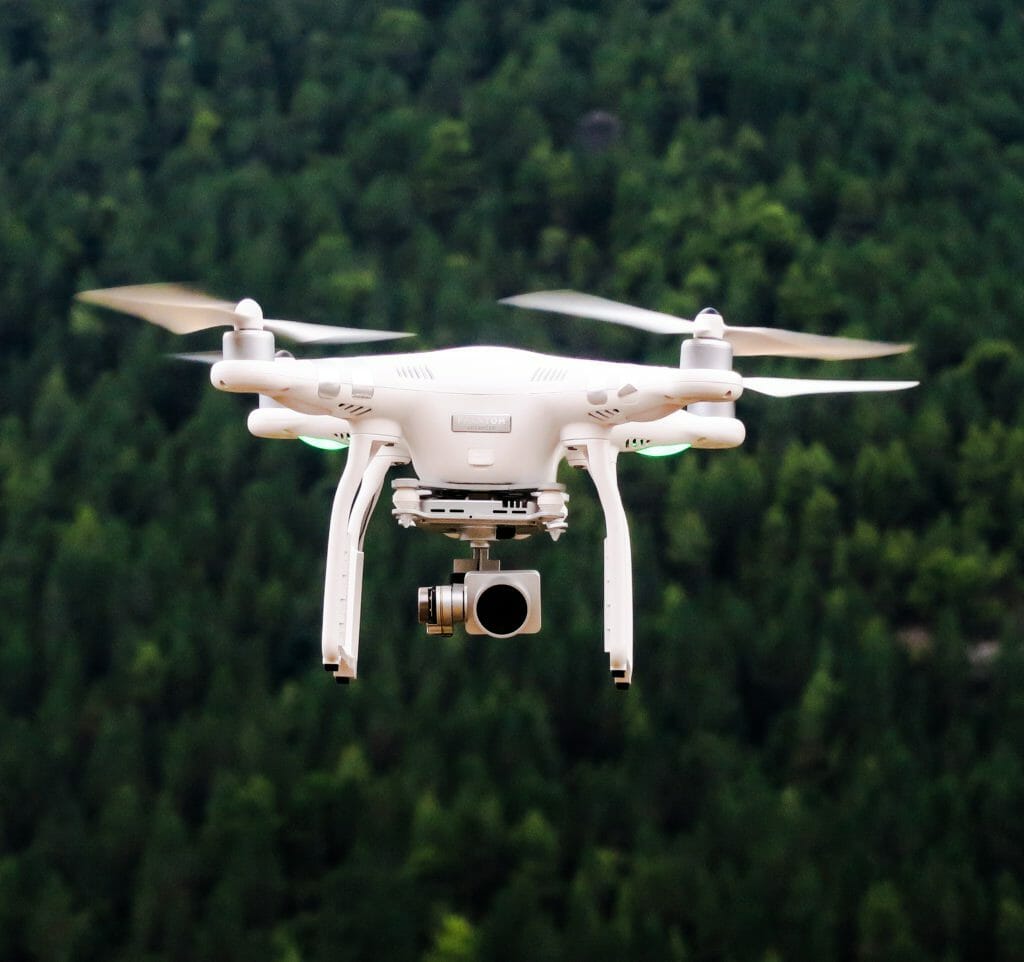
When You Stare Into the Drone, the Drone Stares Back At You: Cybersecurity Lessons From the Field
On November 3rd, the Strauss Center welcomed Ryan English, a Protection and Cybersecurity Expert, for a discussion titled “When You Stare Into the Drone, The Drone Stares Back At You: Cybersecurity Lessons From the Field.” This was part of the Strauss Center’s speaker series titled “Tales from the Cybersecurity Front,” aimed at sharing stories from the cyber world. Strauss senior cybersecurity fellow Wendy Nather provided introductory remarks before English kicked off his talk. He began by stating that “cyber security happened to me,” meaning that he did not intend to pursue a career in cybersecurity. He walked the audience through his journey, drawing his relationship with cyber back to his early days as a Marine scout/sniper in the 1990’s.
After graduating from college, English returned to the field, now working as a Department of Defense contractor in Baghdad. He described his experience trying to get Wi-Fi set up in the base, and his subsequent discovery that the Wi-Fi network was unsecured. This meant that America’s largest facility in Baghdad was sending sensitive information back to U.S. Central Command without any encryption. English then turned to discuss the theme of the talk: drones and the rollout of distant control without extreme latency. English noted that this new technology enabled distant operators to make big decisions in real time and with higher fidelity. However, it was later discovered that these image feeds were also not encrypted, enabling malicious actors to pirate the uplink signal. English noted that policymakers were warned about this possibility early on but privileged the speed of the technology over security concerns. He said this was a recurring issue in the cyber field: security folks will identify a problem that goes unresolved in favor of political goals.
Biography
Ryan English is a veteran, small business owner, and cybersecurity disciple. He first experienced the defense and security field as a young Marine scout/sniper in the 1990s. As his studies at university ended and the conflict in the Middle East progressed, he became involved in the War on Terror: first as a defense contractor training Iraqi police in Baghdad, then re-enlisting to deploy in the National Guard, and finally working for the State Department as a member of the US Ambassador’s High-Threat protective detail in Iraq. In 2012 he was fortunate enough to be indoctrinated into the arcane world of information security by two of the industry’s most notorious security researchers, followed by work in cyber threat intelligence. He has absorbed lessons in the industry both from seasoned practitioners and the unpredictability of startups. He is currently on the board of an all-veteran cybersecurity company, and leads a team of executive protection specialists working in the Atlanta area.