Klein Testifies to Senate Judiciary Committee on FISA Reauthorization and Reform
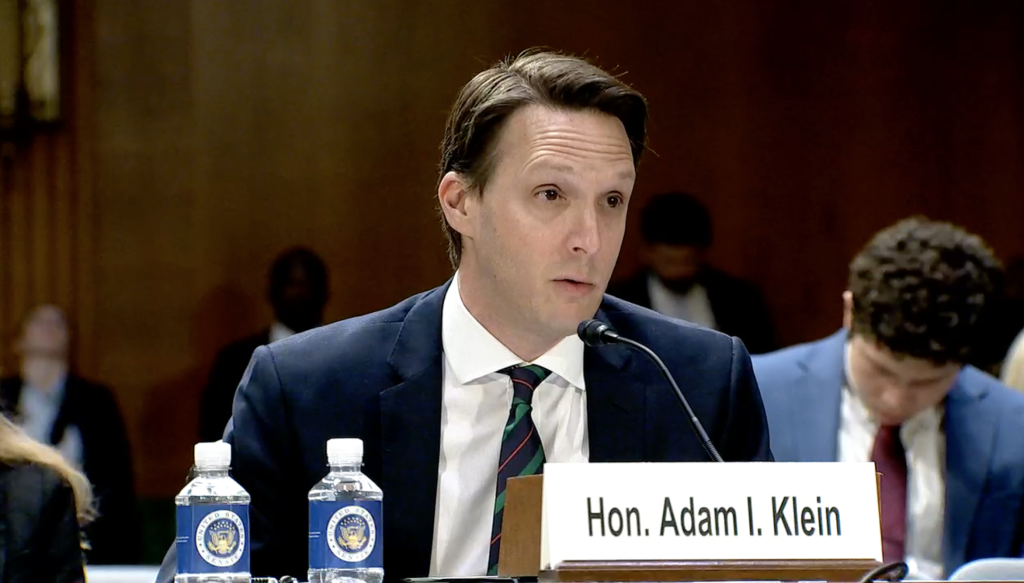
On Wednesday, January 28, Strauss Center Director Adam Klein testified before the U.S. Senate Committee on the Judiciary in their hearing, “Review and Reform: The Foreign Intelligence Surveillance Act [FISA] and Executive Accountability.” The hearing was held in anticipation of the approaching sunset of FISA Section 702 in April 2026.
“For almost twenty years, Section 702 has helped our government protect the American people,” Klein began, in his prepared remarks. “…The basic principle is simple: When data from our foreign intelligence targets passes through the United States, it is collected to protect our nation.”

Throughout his testimony, Klein emphasized the significance of FISA Section 702 in enabling the United States Intelligence Community and law enforcement to collect critical investigative information in the interest of national security.
“The targets under 702 are non-Americans, overseas, who are likely to possess foreign intelligence information,” Klein explained, in discussing the balance of 4th Amendment civil liberties with investigative inquiries. “We have FBI conducting national security investigations, whether criminal or intelligence, here in the United States. And, if one of those people in the United States is connected to a priority foreign intelligence target, that is potentially very concerning, very alarming. We may need to act on that very quickly to prevent a terrorist attack or some other catastrophe.”
For more information, read Klein’s written testimony here and watch the Committee hearing in full here.
More news from Strauss
Strauss Center Director Adam Klein Appointed to Congressional FISA Reform Commission
Strauss Center Director Adam Klein has been appointed to the congressional FISA Reform Commission by U.S. Senate Majority Leader John Thune. Klein brings to the Commission his experience as former Chairman of the United States Privacy and Civil Liberties Oversight Board, which oversees the Foreign Intelligence Surveillance Act of 1978 (FISA) and other national security authorities. The Commission is tasked...
The Role of Military Force in Political Strategy
Sheena Chestnut Greitens, Director of the Asia Policy Program and Editor of the Texas National Security Review, recently published “On War and Politics” in the fall edition of the Texas National Security Review. Utilizing a historical lens, Greitens emphasizes the “the need to integrate the use of military force with broader tools of strategy and statecraft in service of broader political goals.”...
FISA’s Section 702: What’s Next After Lapse?
Adam Klein, Director of the Strauss Center for International Security and Law, was quoted in an article in Dispatch on "FISA's Section 702 Has Lapsed. Now What?". Section 702's authority on surveilling non-Americans abroad lapsed for the first time on June 12. “The relative constitutional clarity that 702 provides should be seen as stabilizing and protective, and so for that...