“Achieving Space Environmentalism and Sustainability” 2023 Space Traffic Management Conference
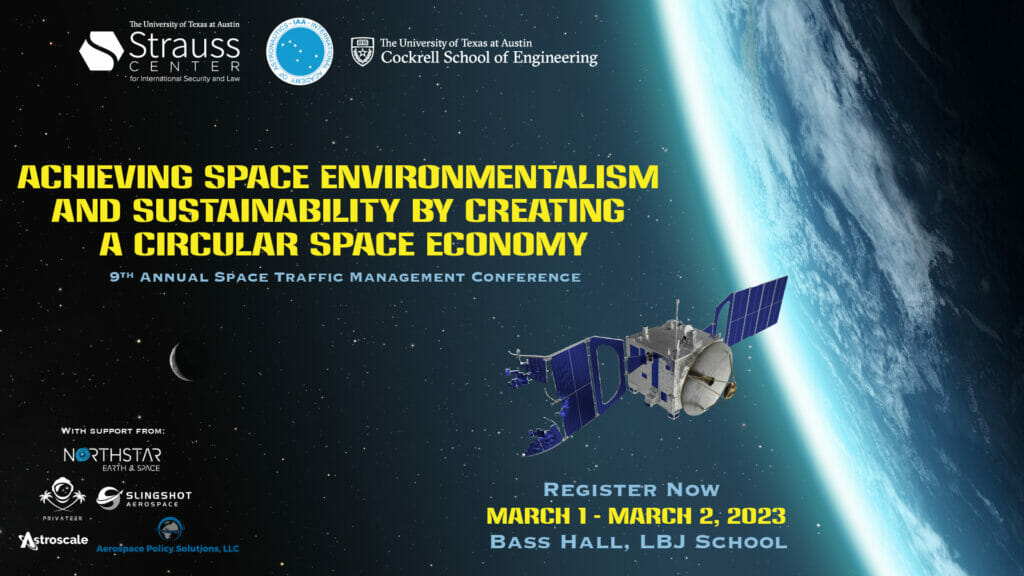
The Space Security, Safety, and Sustainability (SSSS) Program at The University of Texas at Austin’s (UT) Strauss Center for International Security and Law and the Cockrell School of Engineering, in partnership with the International Academy of Astronautics (IAA), held the 9th annual Space Traffic Management conference, “Achieving Space Environmentalism and Sustainability by Creating a Circular Space Economy” on March 1-2, 2023.
For more pictures of the event, please see our page on Flickr. YouTube recordings of most of the conference is available on our YouTube channel. See more materials, including the agenda, below.


Additional support was provided by NorthStar Earth and Space, Aerospace Policy Solutions, LLC, Slingshot Aerospace, Privateer, and Astroscale.

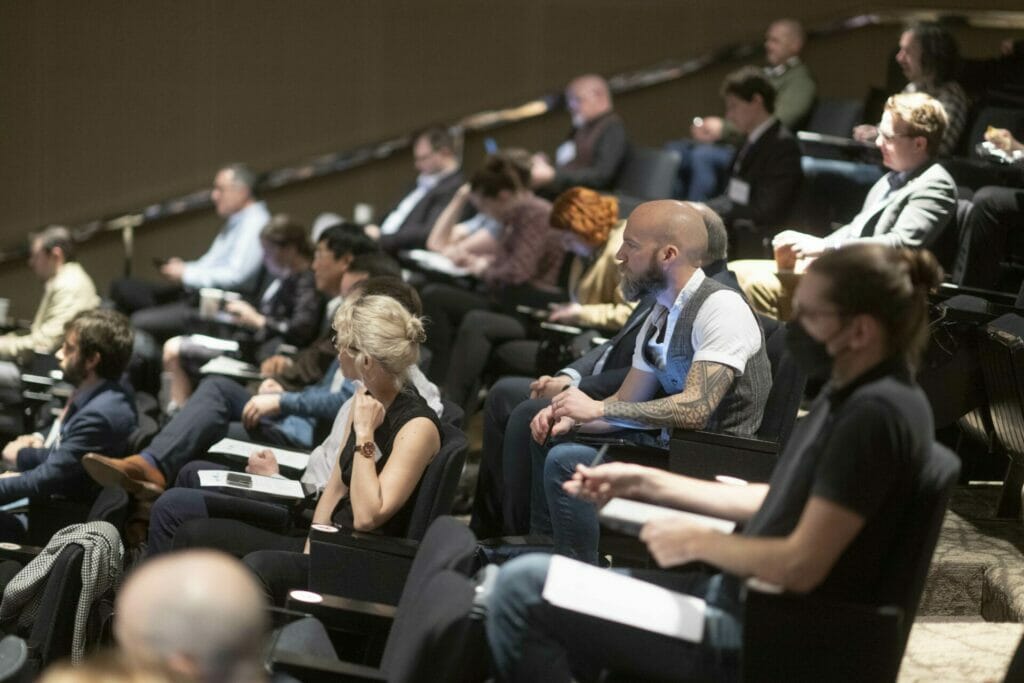

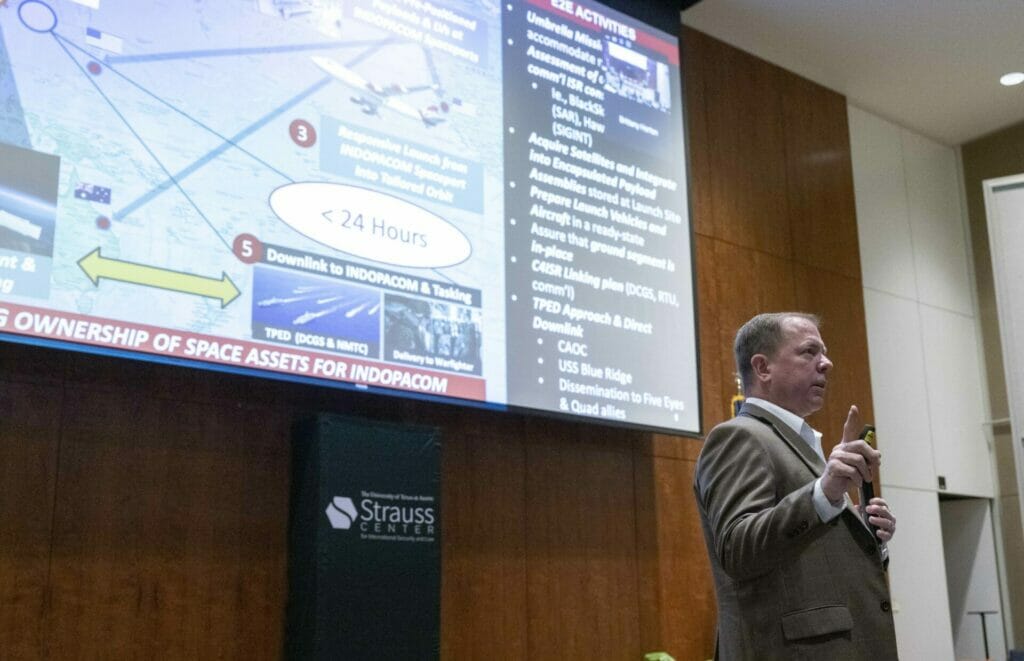

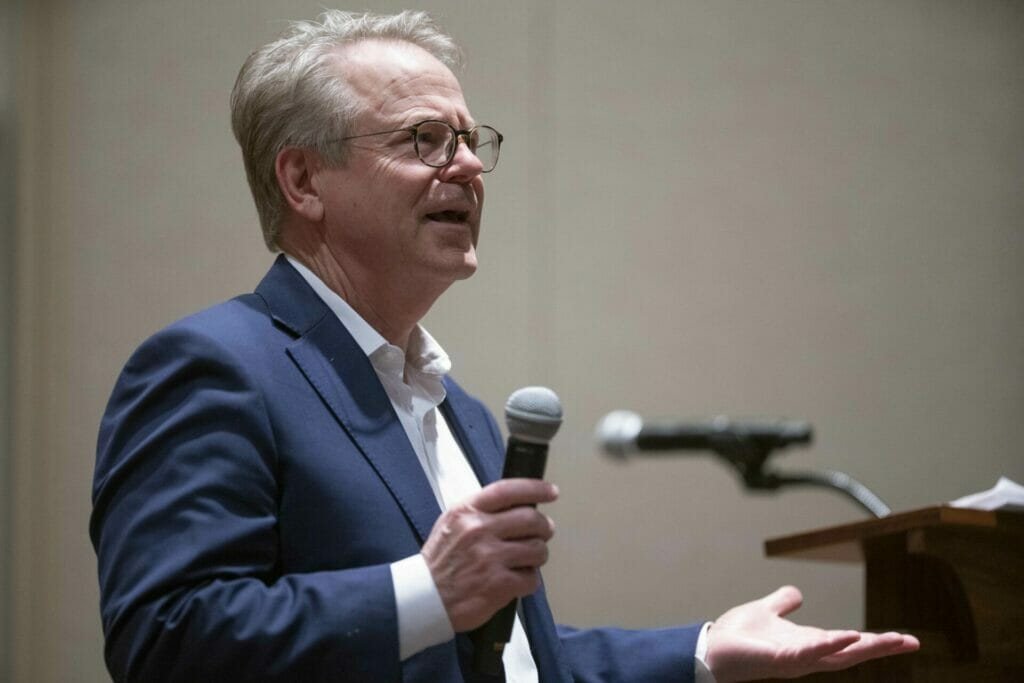
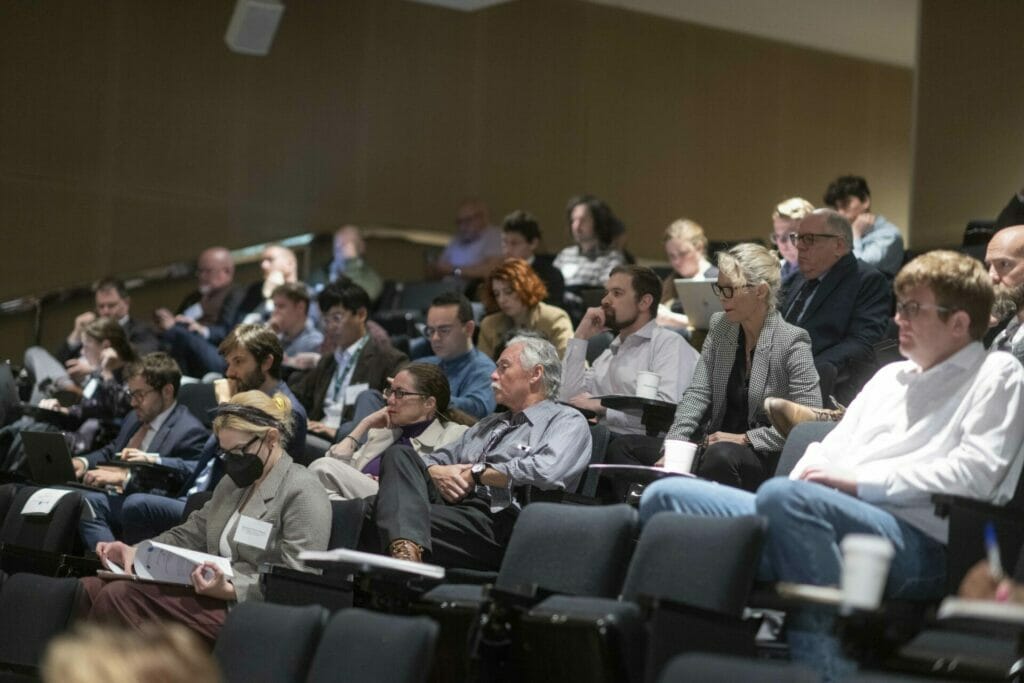
Experts from all over the world gathered to discuss and exchange on Space Traffic Management. Technical sessions were devoted to several topics like Circular Space Economy (new), Range Management, Airspace/Orbital Space Integration, Space Safety and Sustainability, Security, Space Environment Effects and Impacts and Related Issues. Papers were solicited, aligned with this year’s theme, in the areas listed below (see bottom of this page).

The Call for Papers is closed: the print version is available here. For more information on the deadlines, abstract template, etc., please see the main STM conference page.
For video and materials from last year’s conference, please see here.
For questions, please email Ali Prince directly at ali.prince@austin.utexas.edu.
Paper Topics
Papers are solicited, aligned with this year’s theme, in the areas listed below:
1. Circular Space Economy
a. Extended Producer Responsibility
b. Producer Responsibility Organizations (i.e. Active Debris Removal)
c. Reusable and Recyclable Satellites and Rockets
d. Responsible Methods of Anthropogenic Space Object Disposal
e. Space Sustainability Rating and incentivizing space pollution prevention
f. Developing Space Salvage practices, guidelines, and laws
2. Range Management
a. Commercial, Civil, and Military Range Safety Continuity
b. Security issues including cyber
c. Range Technology Modernization
3. Airspace/Orbital Space Integration
a. High Altitude Balloon impact upon the Airspace
b. Impacts of Microsatellites upon the Airspace
c. Integration of Air Traffic and Space Traffic Control Systems
d. Communication Standards for Space Traffic
4. Space Safety and Sustainability
a. Anthropogenic Space Object Taxonomy and Classification to Aid Regulation and Space Traffic Management
b. Space debris remediation, mitigation, and SSA technologies
c. Unique Anthropogenic Space Object Identification (URSOI) and how to achieve it
d. Space Object and Event Data Curation, Sharing, and Exploitation
e. Multi-Source Information Fusion, Artificial Intelligence, and Machine/Deep Learning
f. Spacecraft Anomalies, Mission Assurance, and Causal Relationships
g. Impacts upon spectrum management and Radio Frequency Interference (RFI)
h. Monitoring Space Object and Event Behaviors (including assessing compliance)
i. Decision-making with incomplete and biased information
j. International initiatives
5. Security
a. UN Prevention of an Arms Race in Outer Space (PAROS) and the Conference on Disarmament
b. Military Uses of Outer Space
c. Dual-Use and Multi-Use Technology Challenges
d. Commercialisation of military space services
e. Defining “attack” or “use of force” in space
f. Counterspace capabilities
g. Verification in space
h. Anti-satellite testing and demonstrations
i. Electronic warfare in space
j. Cyber and space security challenges
k. Dedicated military space agencies (space force, space corps)
l. International initiatives
m. National space defence policies
n. International humanitarian law in space
6. Space Environment Effects and Impacts
a. Resultant Anthropogenic Space Object Behavior and Discovering These from Big Data
b. Launch and Space Flight Meteorology
c. Space Weather forecasting
7. Related Issues
a. Role of human factors in STM
b. Industry’s role
c. Industry requirements
d. International initiatives and concerns
e. Standards inflection points and development