
Israel’s 9/11? The Hamas Terrorist Attacks & the Future of Mideast Security
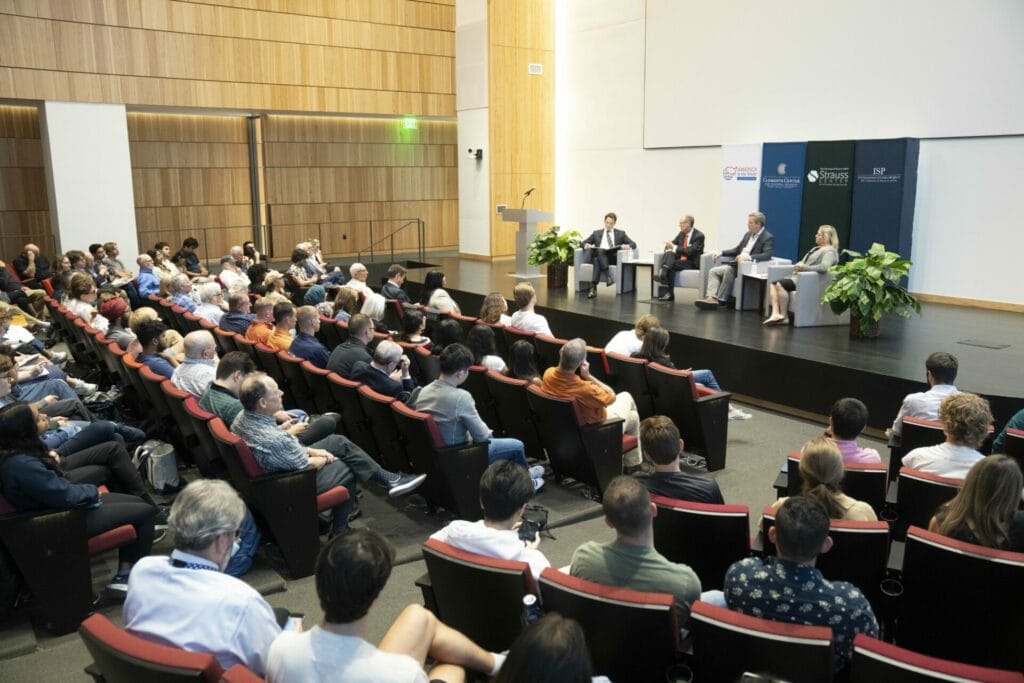
On Thursday, October 12, the Clements Center for National Security, the Strauss Center for International Security and Law, the Intelligence Studies Project, and the America in the World Consortium hosted “Israel’s 9/11? The Hamas Terrorist Attacks and the Future of Mideast Security” with Paul Edgar, Former Political Advisor for Israeli Affairs, Office of the United States Security Coordinator and Executive Director of the Clements Center for National Security, Simone Ledeen, Former Deputy Assistant Secretary of Defense for the Middle East, and Steve Slick, Director of the Intelligence Studies Project and Professor of Public Policy Practice at The LBJ School of Public Affairs. Adam Klein, Director of the Strauss Center for International Security and Law and Senior Lecturer at the University of Texas at Austin School of Law, moderated the discussion after an introduction by Texas Law School Dean Bobby Chesney.

Dean Chesney opened the evening event by describing his study of terrorism throughout history and telling a moving story of his own personal experiences with the impacts of the terrorist attacks on September 11, 2001. He also stressed the importance of colleges and research centers on campus to help us all contextualize the horrors we see and experience through times such as these.
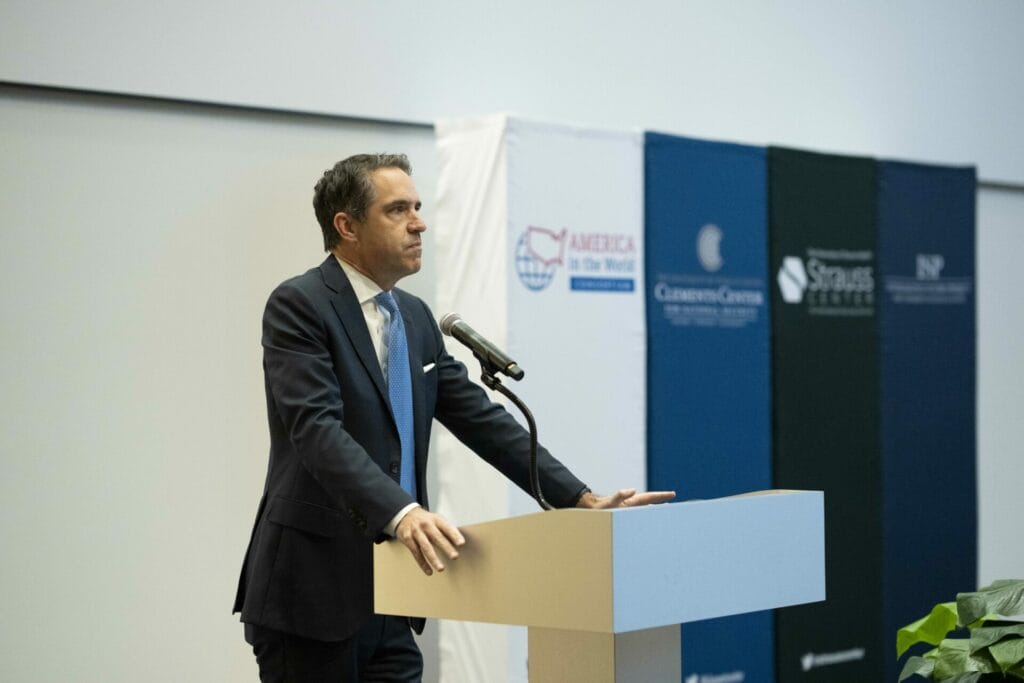
“Ends do not – and cannot – justify such means,” Chesney said about Hamas’ attacks on Israel in early October. “This is an essential, civilizational human achievement to try and substantiate this rule.”
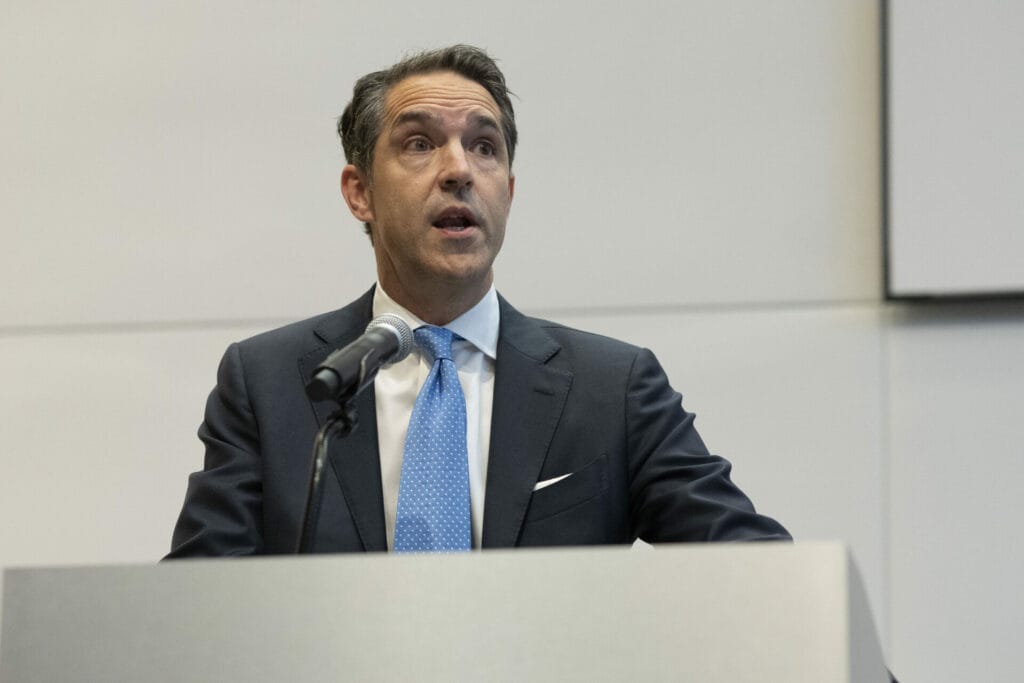
Director Klein was next to speak. He opened his remarks by contextualizing the attacks in Israel through Americans’ own experiences and feelings in the aftermath of terrorist attacks, both at home and abroad. “And here we are again,” Klein began. “We are looking deep, deep into the abyss of human cruelty. We are facing uncertainty. We are facing a disordered world, where assumptions that we had made about the rules of the road, about global order, are being shaken.”
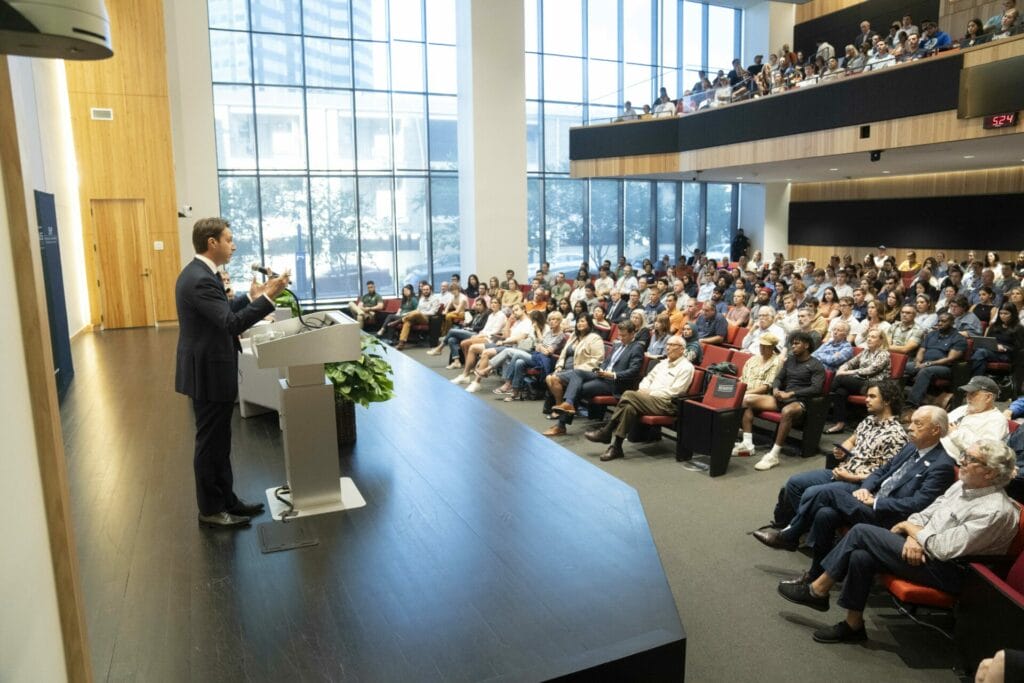
Klein reiterated Chesney’s assertion, stating that “as campus centers, it is our job – as people who have served in government office in the United States and the many experts we’re able to call on – to help the community find a forum where we can wrestle with these questions, not merely on a philosophical and moral level but, more practically, on a policy level as citizens who are ultimately called on to participate in our own government’s decision-making about these things.”
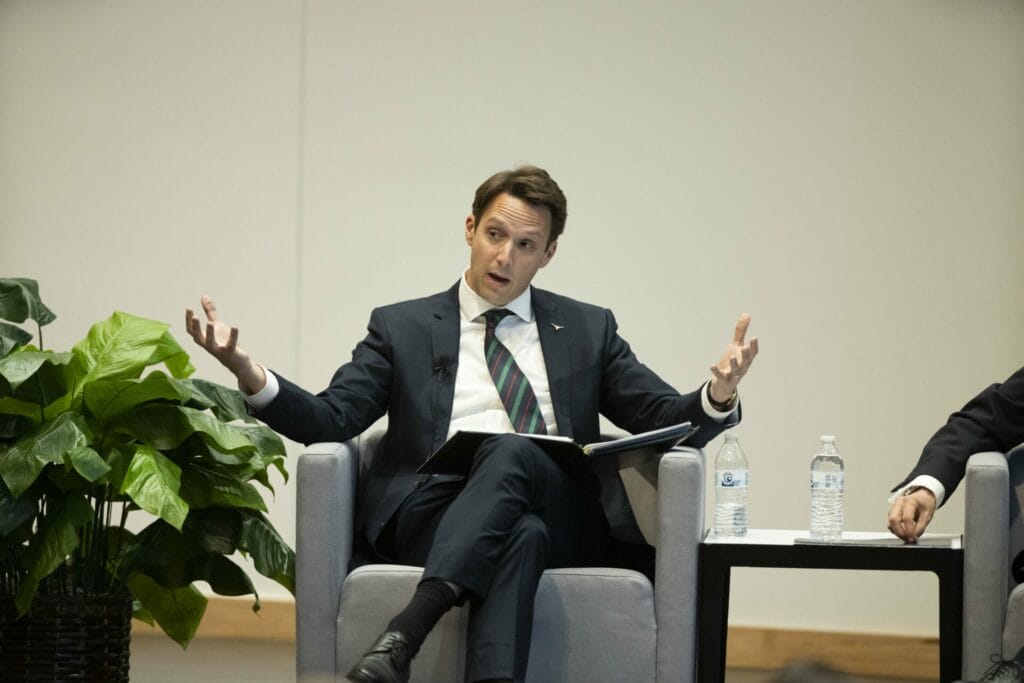
Steve Slick next provided remarks, reflecting on how “these events were a reminder of the inhumanity of groups that employ indiscriminate violence to achieve their political aims and the need to confront and defeat them.”
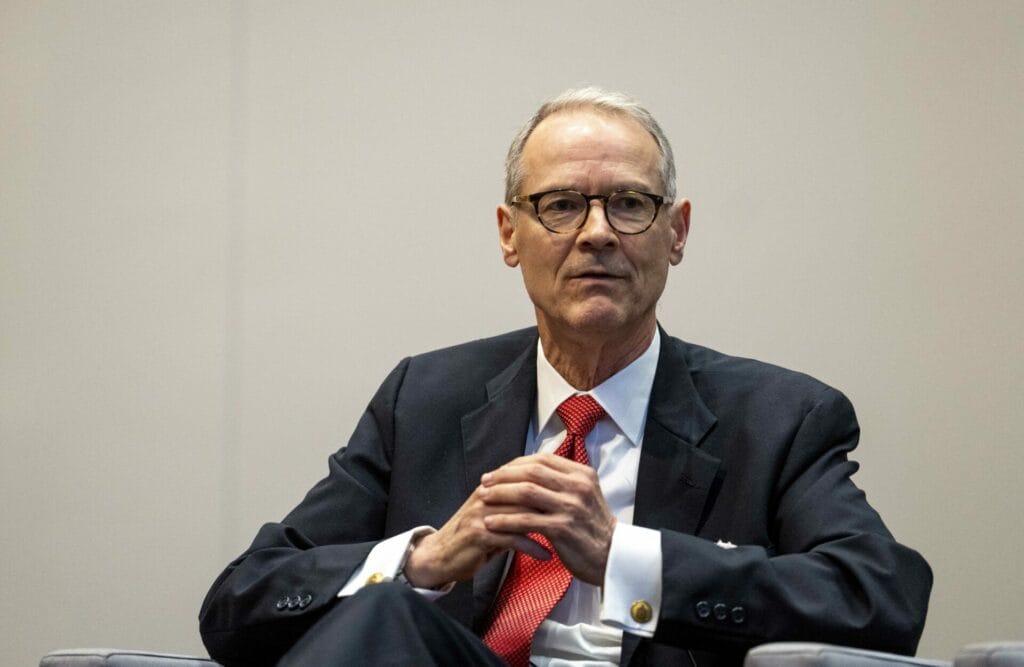
Bringing his vast career experience within the intelligence community to the discussion, Slick went on to describe how, when he hears the attacks in Israel characterized as an “intelligence failure,” his immediate response is “not so fast.”
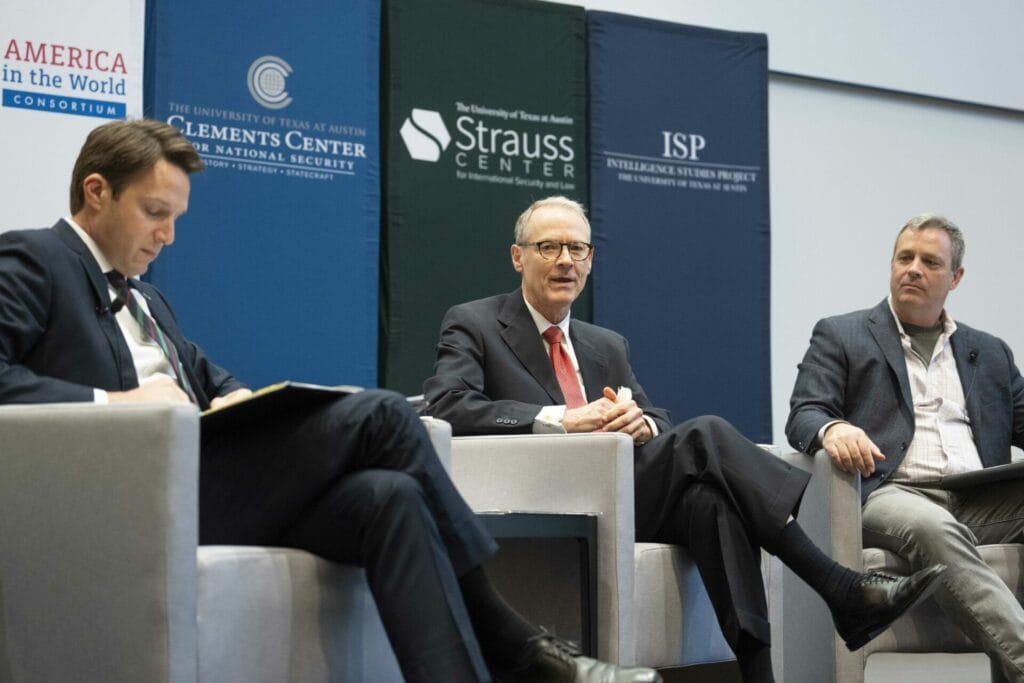
“It’s safe to conclude that Israel’s military and political leaders were certainly unprepared for these attacks,” Slick assessed. “The nature of the attack speaks to that point. But, it’s too early to conclude that the attacks were unwarned or that Israel’s intelligence failed and to speculate why and how it may have failed. We should not prejudge this case.”
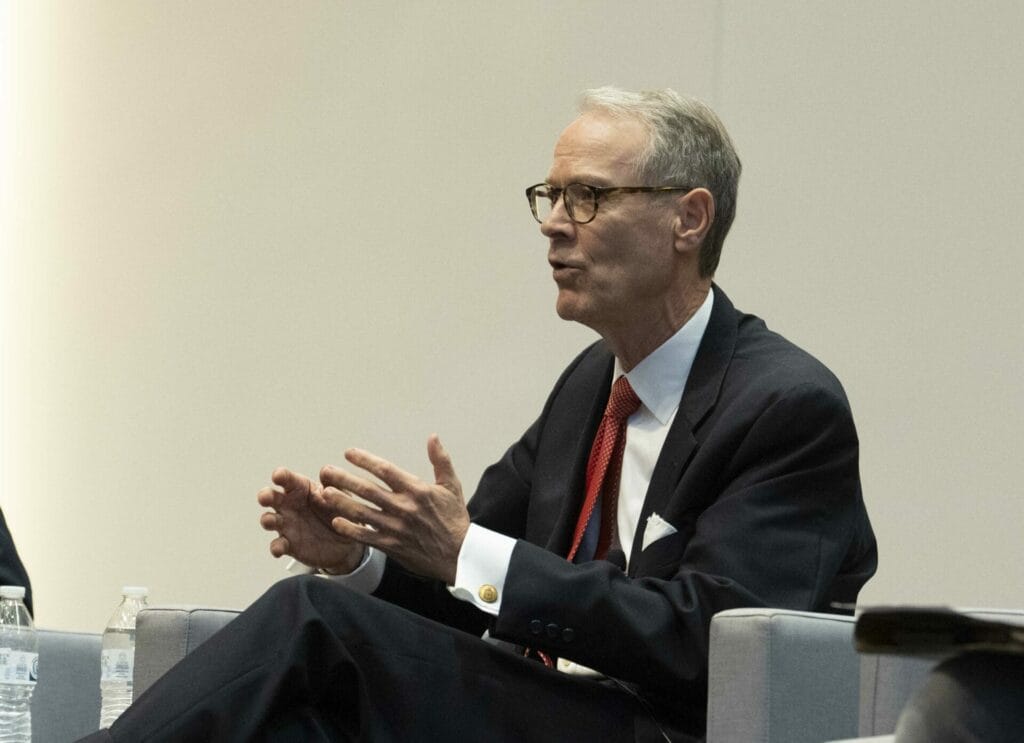
Slick concluded his remarks by sharing his analysis of the long-term implications of the Hamas attacks in Gaza for U.S. intelligence. “At a bare minimum, this is a stark reminder that the threat from terrorists to the U.S. and its allies was not extinguished by the deaths of Osama Bin Laden [and other terrorist organization leaders]…Our terrorist enemies are adaptable, resilient, and still lethal.”
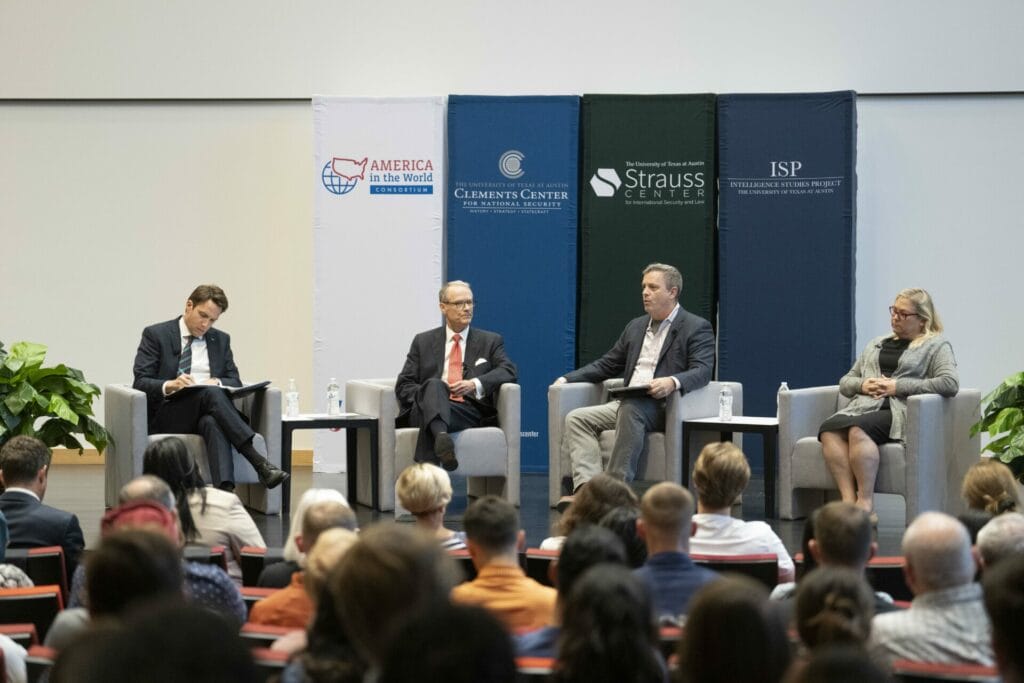
In his comments, Paul Edgar focused on the ongoing military operations by Israel’s military in Gaza, up to the time of this discussion, and his expectations for their next steps. He made the important caveat that every panelist on stage was sharing their expertise with the limitation of what information was publicly available at the time of the event.
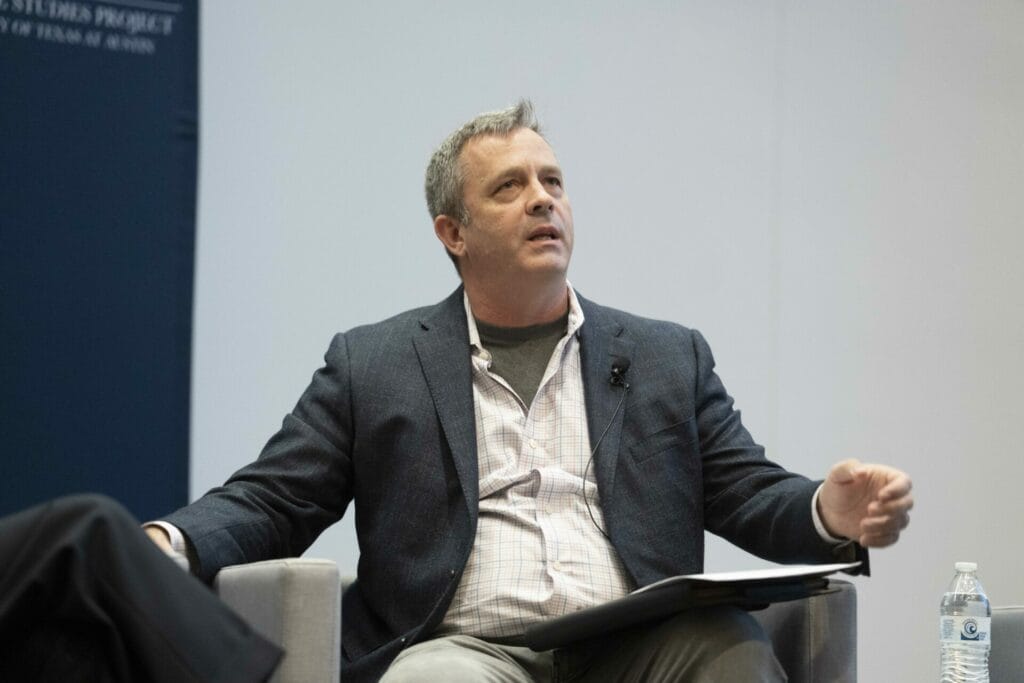
Edgar referenced the many individuals across the U.S., including those at the University of Texas and larger Austin community, who were traveling to Israel to join the effort. “A gentleman in his 70s, pushing his 80s…mobilized himself to get over there and to help,” Edgar described. “You have not seen this kind of mobilization in the Israeli military since the Yom Kippur War in 1973.”
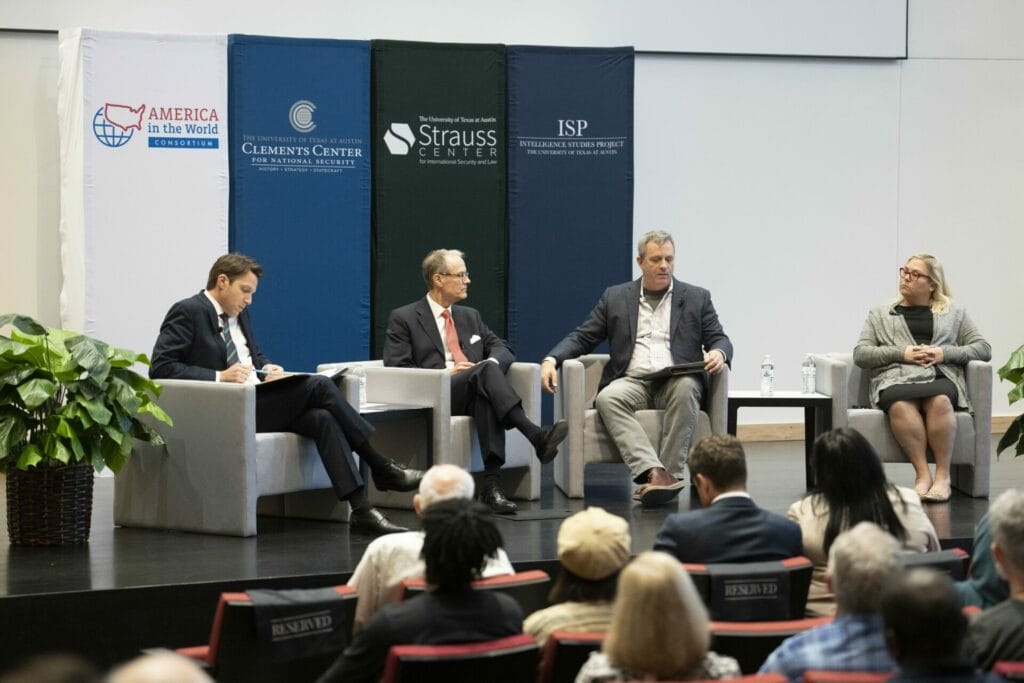
He explained military tactics and initiatives then shifted to commentary about distinguishing the acts of Hamas from those of Palestinian civilians, emphasizing that Hamas makes illegitimate claims and is “sacrificing their own noncombatants in the process.” Edgar ended his prepared remarks with his analysis of the prospect of a larger war in the region and the tactical success or failure of Hamas’ actions in Israel.
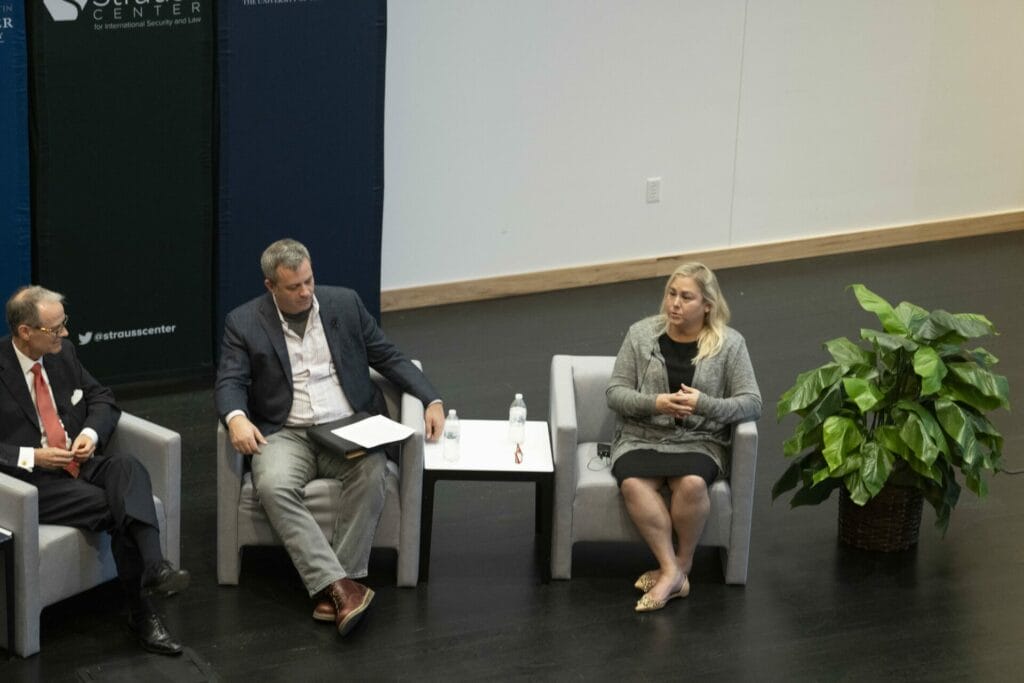
In her portion of the discussion, Simone Ledeen leant her experience of the region to a geopolitical discussion of the causes and impacts of the attacks. “Number one: it’s critically important to understand the timing of this invasion, this war, and the severity of it,” Ledeen said.
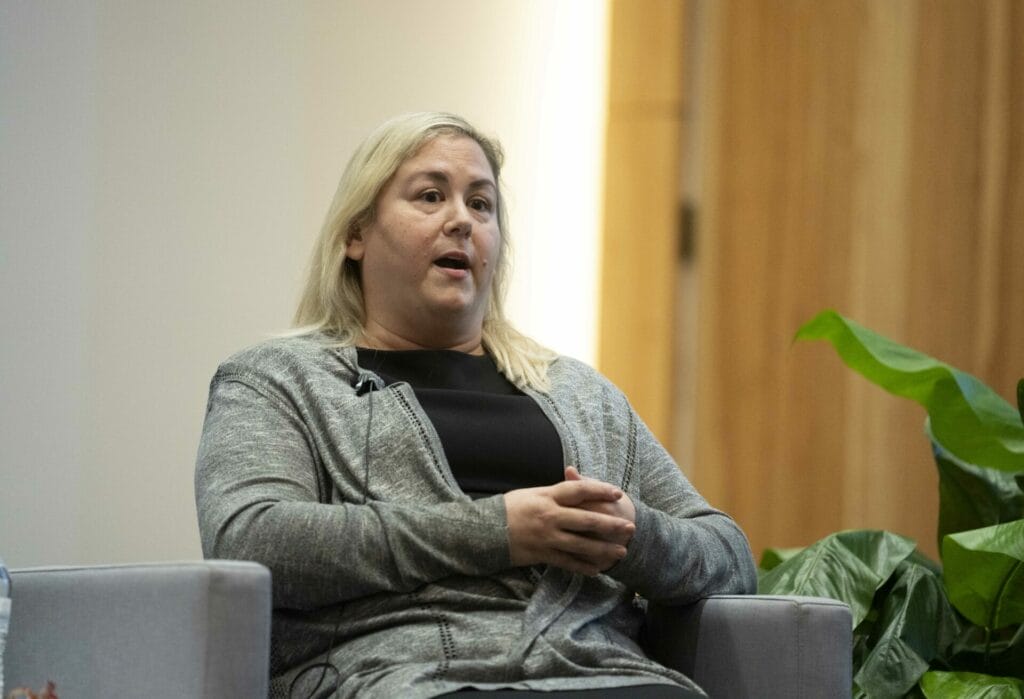
She was also very introspective about her previous interpretations of Hamas and how their attacks in Israel shifted her mindset. “I have to say: I was wrong,” Ledeen confessed. “I’ve been doing a lot of reflection because I was one of those people who thought, ‘Hamas, they’re really bad. They’ve killed a lot of people. But, you know, now they’re dealing with a lot of bureaucracy, they’re running Gaza…’ And I mistakenly thought that’s really where they were focused and that it had tempered them a bit. It had not. It had not. They are who they always were.”
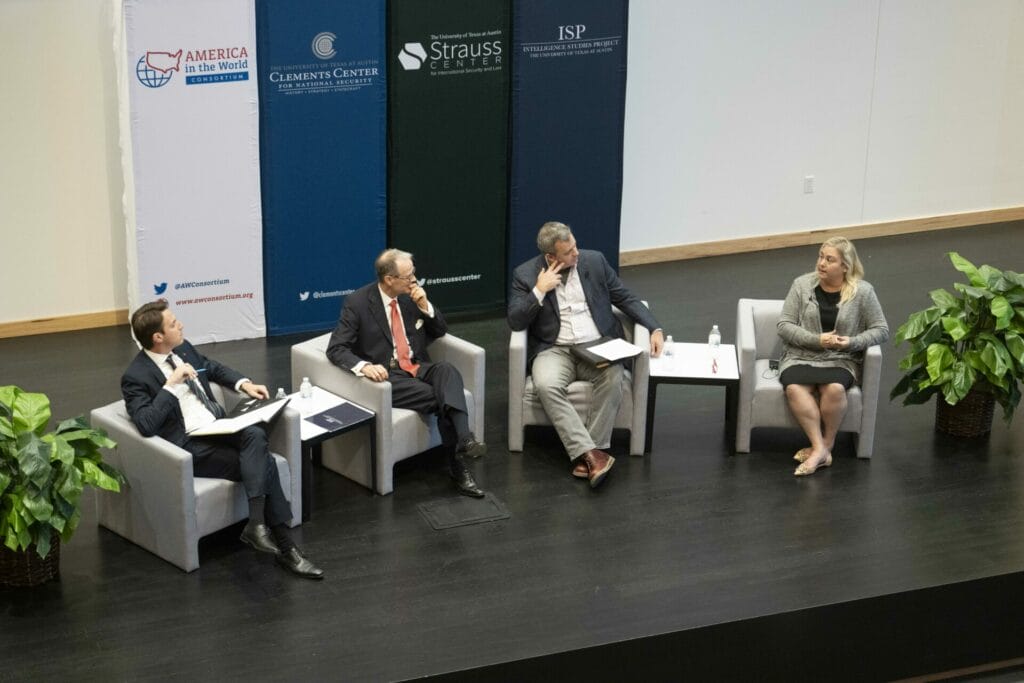
Ledeen was the most direct of the panelists in asserting blame for the attacks to Iran via Hamas, which kicked off a vibrant debate among the speakers. The rest of the conversation included discussion of regional geopolitics, American capacity for warfare on multiple fronts, the use of non-state actors as proxies, and the different perspectives each panelist has in interpreting these events; whether as a national security lawyer, intelligence officer in the clandestine service, a Department of Defense policymaker, or a military officer.

Director Klein’s final question to the panelists came after he cited the Law of Armed Conflict and its distinction between civilians and combatants, particularly as it applies to hostages. “It is flatly forbidden to kill civilians, to kill noncombatants, in the service of any military objective,” Klein explained. “Now, that doesn’t mean that it’s always illegal to conduct an action that results in the death of civilians. Those are tragedies, but not necessarily illegalities, as long as you have a valid military target…You have to move your civilians away from your military installations and it is absolutely forbidden to move them towards military installations to use them as human shields.”
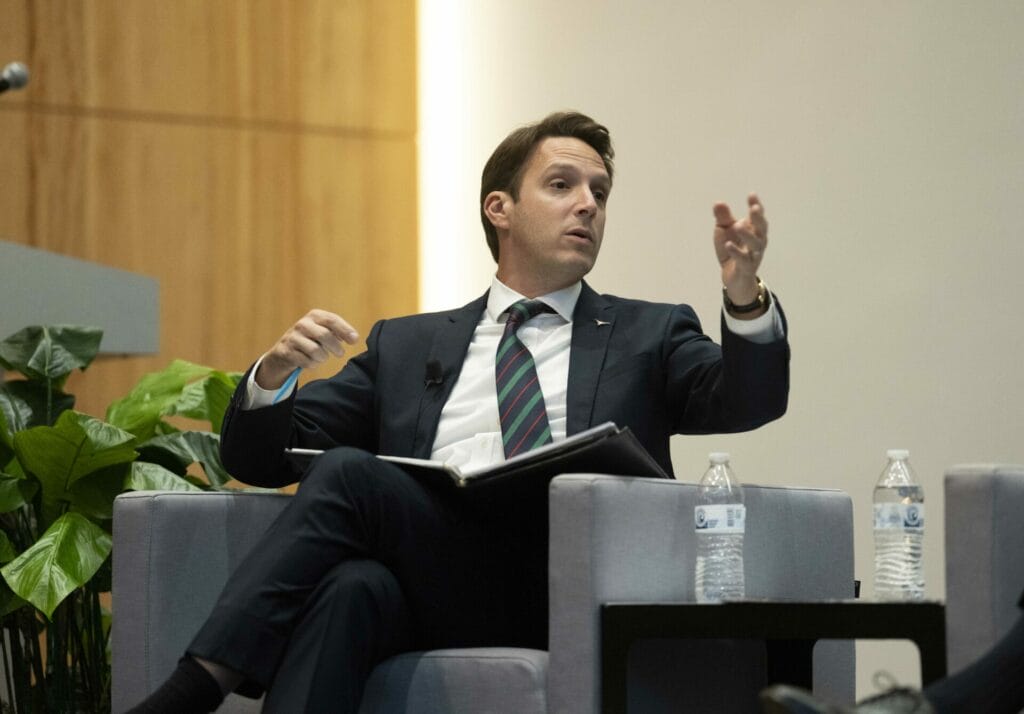
Klein continued, “I fear this is likely to intensify some of the foreseeable and very tragic harm to innocent civilians that we’re likely to see as a collateral result of military strikes on military targets.”
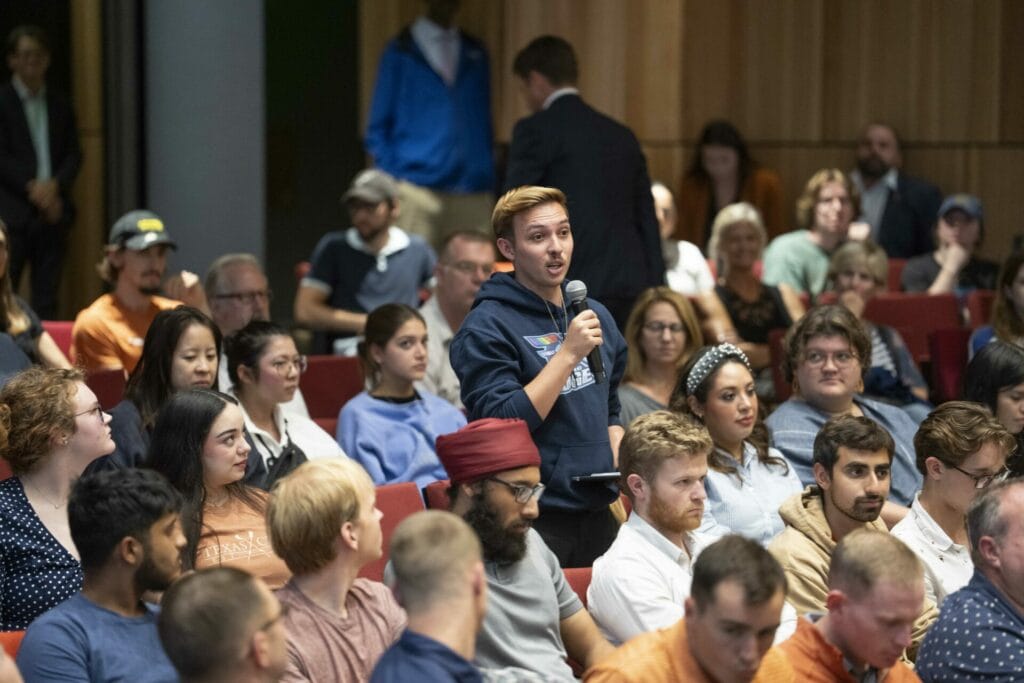
Throughout the program, each panelist emphasized and emulated the importance of nuanced conversation about the events unfolding in Israel and Gaza, both welcoming debate and inviting questions from each other and the audience before wrapping up the discussion.
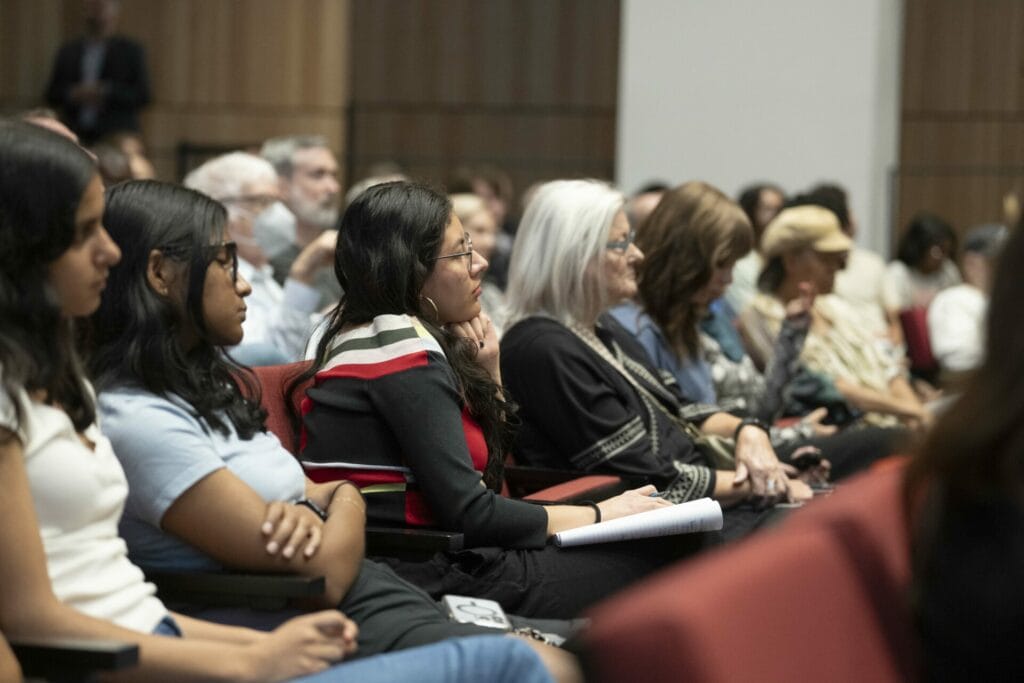
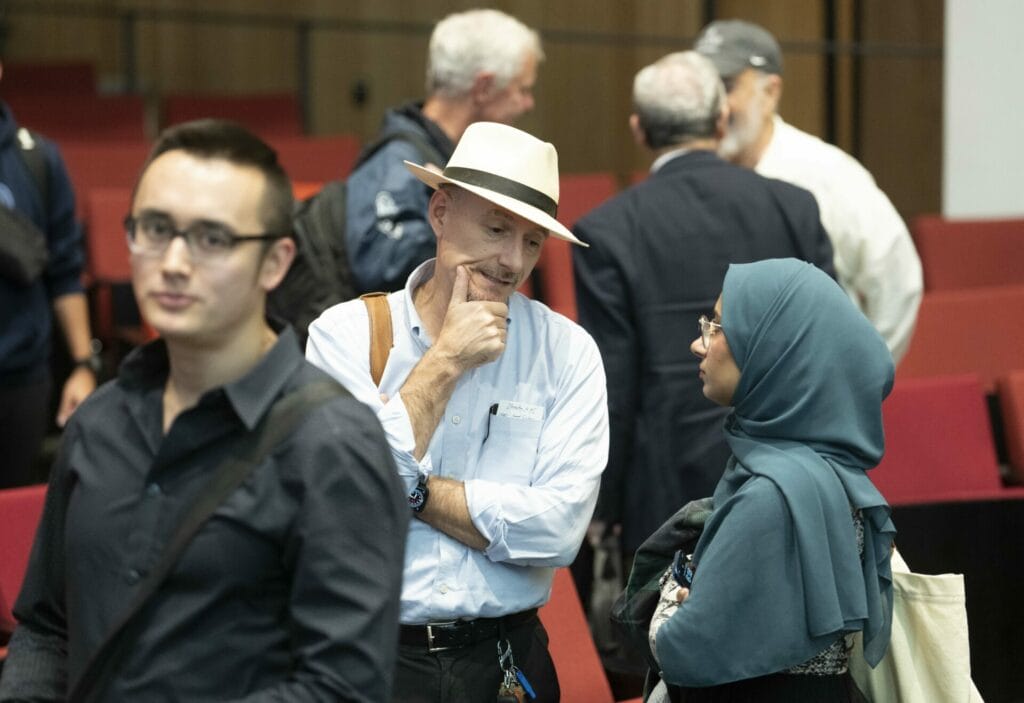
The talk was held at 5:15 pm in Crum Auditorium, Robert B. Rowling Hall. Thank you to all who attended this event and thank you again to our co-sponsors at the Clements Center, Intelligence Studies Project, and America in the World Consortium.
To listen to the discussion in full, visit the podcast episode for Horns of a Dilemma here, or in your podcast app of choice.
Biographies
Adam Klein is Director of the Strauss Center and Director of Strauss’ Program on Technology, Security, and Global Affairs. Adam also serves as a Senior Lecturer at the School of Law. Before joining the Strauss Center, Adam served as Chairman of the United States Privacy and Civil Liberties Oversight Board, the independent, bipartisan federal agency responsible for overseeing counterterrorism programs at the NSA, FBI, CIA, Department of Homeland Security, and other federal agencies. As the Board’s Senate-confirmed Chairman, he oversaw its oversight and advice engagements with other federal agencies, while also serving as the Board’s chief executive officer. Before entering government, Adam was the Robert M. Gates Senior Fellow at the Center for a New American Security, a bipartisan national-security research institution in Washington, DC. There, his research focused on government surveillance, intelligence powers, and national security law. Previously, Adam practiced law at Wilmer Cutler Pickering Hale & Dorr, LLP and served as a law clerk to Justice Antonin Scalia of the U.S. Supreme Court and Judge Brett Kavanaugh of the U.S. Court of Appeals for the D.C. Circuit. He has also worked on national-security policy at the RAND Corporation, the 9/11 Public Discourse Project (the non-profit successor to the 9/11 Commission), and in the U.S. Congress.
Paul Edgar is the Interim Executive Director of the William P. Clements, Jr. Center for National Security at the University of Texas-Austin. He holds a PhD in Middle Eastern Languages and Cultures from the University of Texas and studies the historical origins of diplomacy, war, and strategy in pre-classical antiquity. Prior to beginning work on his PhD, Paul had been an Olmsted Foundation Scholar at Tel Aviv University where he studied for his master’s degree, focusing on early Israelite and Jewish literature from the Iron Age through the Crusades. Before entering academia, Paul served more than 22 years as an infantry officer in the U.S. Army in conventional paratrooper and special operations units. In his final assignment for the Army, Paul was the political advisor for Israeli affairs to the United States Security Coordinator in Jerusalem.
Simone Ledeen is the former Deputy Assistant Secretary of Defense (DASD) for the Middle East. Ms. Ledeen was responsible for US Department of Defense Policy for Bahrain, Egypt, Israel, Iran, Iraq, Jordan, Kuwait, Lebanon, Oman, Palestinian Authority, Qatar, Saudi Arabia, Syria, United Arab Emirates and Yemen. Previously she served as the Principal Director to the Deputy Assistant Secretary of Defense for Special Operations and Combating Terrorism. In this capacity, she provided oversight of the employment of special operations forces in counterterrorism, Military Information Support Operations (MISO), Information Operations, unconventional warfare, irregular warfare, direct action, special reconnaissance, foreign internal defense, counter proliferation, sensitive special operations and personnel recovery/hostage issues as specified by the Secretary of Defense. Prior to her appointment, Ms. Ledeen served as an Executive Director at Standard Chartered Bank where she led the successful launch of the bank’s multi-national financial crime compliance program in Africa, the Middle East and Pakistan. For over a decade, Ms. Ledeen served in various US Government positions. From 2009-2010, Ms. Ledeen was the Senior US Treasury Representative to NATO’s International Security Assistance Force in Afghanistan. She began her government career in 2003 as an Advisor to the Iraqi Ministry of Finance in Baghdad, where she served as part of the Coalition Provisional Authority.
Stephen B. Slick is the Director of the Intelligence Studies Project, a joint partnership between the William P. Clements Center for National Security and the Strauss Center for International Security and Law. He retired in 2014 after 28 years as a member of CIA’s clandestine service. Between 2005 and 2009, Steve served as a special assistant to the president and the Senior Director for Intelligence Programs and Reform on the staff of the National Security Council. He was previously the Director for Intelligence Programs at the NSC. While serving at the White House, Steve participated in efforts to restructure and reform the intelligence community informed by recommendations of the commissions charged with investigating the 9/11 attacks and the flawed pre-war analysis of Iraq’s unconventional weapons programs. These efforts included a series of executive orders on U.S. intelligence issued in August 2004, key provisions in the Intelligence Reform and Terrorism Prevention Act of 2004, the administration’s responses to recommendations by the “WMD Commission”, as well as significant amendments to Executive Order 12333 that were approved by President George W. Bush in 2008.